Hate Crimes

By Margo Pierce

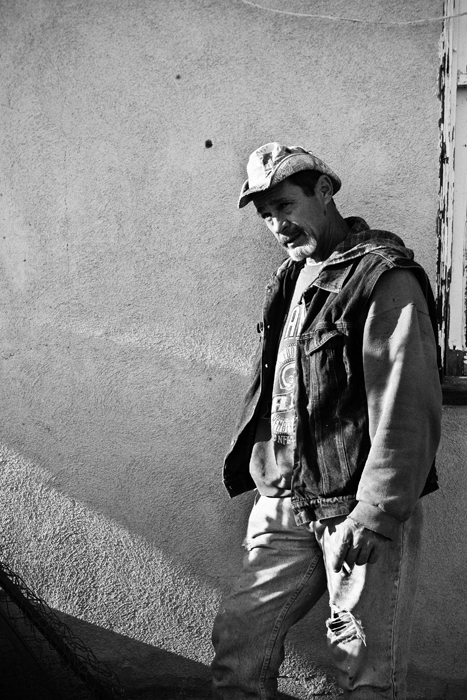
John Johnson needed 18 stitches in his head and his girlfriend was in fear for her life after an April 10 attack at a camp in Cincinnati where they lived. Johnson, 52, says he was sleeping under a highway overpass at about 3 A.M. when four men attacked him.

“I was awakened by four young men telling me to exit the property,” he says. “As I was complying with them, they started beating me with pipes and bats upside the head and up and down the left side of my body.”

Johnson’s attack is part of a bigger pattern of abuse that is becoming more apparent across the country. Homeless people all over North America are being set on fire, beaten, stabbed, shot, strangled, brutalized by police, harassed and raped. Many of these crimes go unreported, and the ones that do come to light might not necessarily be recorded as hate crimes.That means statistics for tracking the violence in order to find ways to address it are inadequate.
 

Read More
The People vs. Thomas Ritchie
Tom Whitefeather wakes at two in the morning on the days he has to go to court.  He scarfs a quick breakfast, then bundled against the cold and the Wonder Valley night, he heads out from the old rock-walled cabin where he lives, threading a path through the high desert greasewood scrub.  A dim headlamp bobs a blue-white orb ahead of his bike as he rides in the pre-dawn stillness following his own tracks, cutting across abandoned homestead parcels, through the sandy washes and brittle bush thickets until he reaches the washboard dirt track of Godwin Road.  Down Godwin he peddles to the lonely asphalt of the paved road, then turns his back to the rising sun for the last twelve miles to the bus stop in town.  He’ll make this trek a dozen times—the arraignment, the fact-finding hearings, the readiness hearings, postponements, postponements, postponements.  On the mornings he goes to court, he gives himself plenty of time, arriving at the bus stop with time enough to scrounge discarded butts and roll a smoke.  He gets there early and he waits.  To miss his court appearance would mean another felony, and more time in jail.
Read More
Denver VOICE
Forget the Bootstraps, Part II—Breaking Free

Interview and Transcription by Margo Pierce

I am a survivor from the life, of the life of prostitution. Everything that we represent here, I am a survivor of—domestic violence, prostitution, drug addiction, criminal justice system, homelessness, rape, all of that. I came here as a client and was a participant in the program in the beginning in 2001. I came straight out of incarceration into treatment and treatment introduced me to Breaking Free.

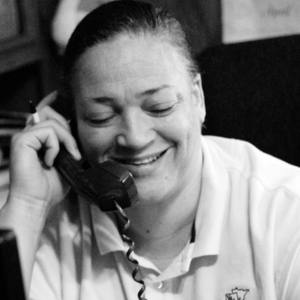
Joy Friedman, women’s program manager at Breaking Free in St. Paul, Minn, makes direct eye contact as she speaks. There is no edge in her tone of voice and no hesitation in her manner. She is an advocate in a house of advocates helping women leave prostitution. When the door is closed to her office, what was once a bedroom in a converted house at 770 University Avenue West, her presence fills the space between boxes, piles of papers on a cluttered desk and the two guest chairs that leave only a skinny floor space for navigation.


Read More
Motel of Last Resorts

Homeless families make up nearly 50 percent of Denver's homeless population, but only 15 percent of shelter beds accommodate families. Is enough being done to keep families together? 

By Kristin Pazulski

Karla Hood and her 20-year-old son Karron have been living together in a small motel room off Colfax Avenue since February. 

Their home is in the Volunteers of America’s (VOA) Family Motel. During the day, the sun glitters off the 70s-style lettering of the sign that still stands from the motel’s former life as Aristocrat Motel. In their room, there are two beds, a closet, a bathroom, two nightstands and a chest of drawers. The room is strewn with belongings that once filled their two-bedroom apartment, but are now confined to the two-bed motel room.

Karla, 48, and Karron had to leave their home of 20 years in February when the landlord of their subsidized housing in East Denver refused to renew Karla’s lease. “It was such a last minute situation,” she said. “I had to leave behind about 75 percent of our stuff. I couldn’t afford the storage. I just let it go. I cried a lot and prayed a lot.”


Read More
Forget the Bootstraps: It takes more than "suck it up" to deal with being bipolar

By Margo Pierce

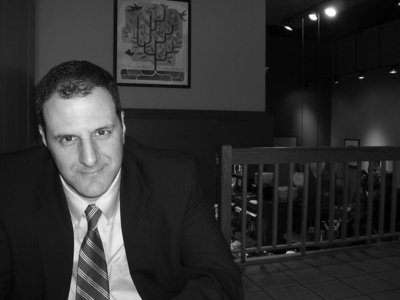
The barista greets some customers by name and wishes everyone a good day. Under the “Pick up” sign stands an older woman wearing a jacket, skirt and tennis shoes, staring into space. A man with three children sits at a table sipping coffee while the kids run around; he’s the only customer in casual clothes in this coffee shop on the first floor of a many-storied office building in downtown Cleveland, Ohio. Two tables over sits a man in a traditional blue suit with a striped red tie. Which one has been diagnosed as bipolar?

It could be any coffee shop in any town. The hiss of steaming milk, the slamming of a refrigerator door, the grinding of beans, “Mocha latte for Bob!”

The man in the blue suit begins to talk.

Read More