Published March 2010 Vol. 14 Issue 3
by Tim Covi
Since the beginning of 2009 a new term, the cul-de-sac commune, has created an almost monthly buzz in Internet chat rooms, newsrooms and forums. Even without investigating much further, it’s easy to see why. It’s a combination of dipolar things. The cul-de-sac is the quiet compound of the suburban soccer mom. You think of easy Sunday mornings where the only sounds are a few finches and the gurgled zip of a freshly oiled bike chain as a neighborhood kid peddles by.
The commune, by contrast, is the cluster of stilted structures slapped up like a Tim Burton daydream on a remote desert horizon. It’s full of poorly washed hippies with radical ideas about free love, or at the very least, visions of utopia.
But for Stephanie Smith, the ideas of a commune and a suburban cul-de-sac don’t have to be at odds. They can even be right at home together in a Denver suburb.
Published March 2010 Vol. 14 Issue 3
text by Tim Covi
photots by Zoriah Miller

When it comes to growth and design, Denver seems to be at the cutting edge of new models of development, embracing terms of the times like “new urbanism,” “sustainable” and “green.” Communities like Lowry, Landmark, Stapleton and Belmar have spotted the landscape on the outer ring of the city over the past 8 years, and newer re-developments like the Gates Rubber Plant project and the planned build out behind Union Station are under way within the shadow of downtown.
Published March 2010 Vol. 14 Issue 3
Will Denver Have its own Harlem Renaissance?
written by Tim Covi
reporting by Dwayne Pride
photography by Adrian Diubaldo
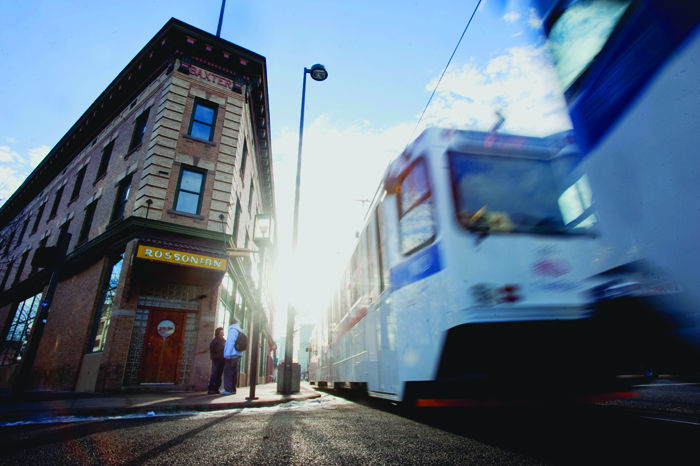
Standing at the corner of Welton and Washington Streets, if you look hard enough you might still see throngs of people coiling around the sides of the Rossonian Hotel. Young men standing under tipped fedoras and women in cocktail dresses and heels lined up to hear some of the best jazz the country has to offer. You’d have to look hard, mind you. Past the dusty, lightly sootsoiled brick, past the 1993 renovations, around the light rail that sidles up to the hotel’s flank and comes to a slow, furtive stop at the traffic light before rushing off down Welton with its payload. You’d need to look beyond the empty shell being remodeled, well into history. Because for several years, this corner has been a husk of what it was.
Publighed February 2010 Vol. 14 Issue 2
by Travis Egedy

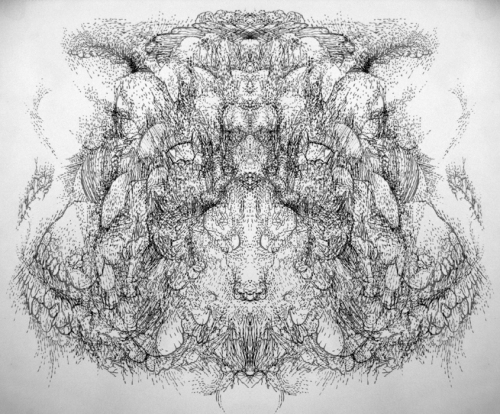
Clark Richert is a lot of things to a lot of people. He is a Colorado institution who for the last 40+ years has been working as an artist, a scientist, a philosopher, a professor; and maybe most importantly, he’s an individual challenging his surroundings and the people who surround him to look deeper into what the universe really is, and how it works.
Published February 2009 Vol. 13 Isuue 1
by Tom deMers
Before this story begins, Paco was leading the ordinary life of a double agent. By day he sold credit card processing systems for MasterCard. Completely legit. By night he called law enforcement officials with information on consumer fraud. “I felt like Clark Kent,” Paco told me, “earning a living in my business suit and informing on these mafia types in my Superman role.” His undercover work prevented the financial abuse of working people and seniors, and Paco was proud of it.
But when the evidence he gathered on one Ponzi scheme was filed in Denver district court, his life became a nightmare. The filings were public record, and the thugs he informed on came after him. The death threats made him quit his job and drop out of sight. They phoned his mother in another state and harassed her for his whereabouts. Paco said the stress was unbearable. He moved out of Denver and into hiding at the home of a friend. After 18 months that situation became untenable, so Paco moved into his truck and hit the road.
Published January 2010 Vol. 14 Issue 1
by Travis Egedy
In this digital age of hypermedia and endless consumption of temporary, throw-away culture, Drippy Bone Books are a breath of fresh air. Drippy Bone Books is first and foremost a publisher of underground zines, handmade Xeroxed art objects that carry their signature style of pop culture collage and child like drawings. Each copy is a thing of personal touch, love and care, a touch that is becoming increasingly foreign in mass-produced culture. Started by local Denver artists Kristy Foom and Mario Zoots, Drippy Bone is now based out of Amsterdam and Los Angeles as well, allowing a large mass of zine fans and appreciators to rabidly snatch up everything this extremely creative collective spits out. With zine titles such as “Whore Eyes,” “Sonic Bonk,” and “Bronze Legs” the collective have a playful approach to what they do, never taking themselves too seriously. I spoke with Mario Zoots and Kristy Foom about building community through art, what it’s like to be making your own books just for the love of doing it.

Published January 2010 Vol. 14 Issue 1
In the rugged hinterlands of Colorado, a Sheepherder has gone off the beaten path in a fight against one of Colorado’s lowest paying industries.
text and images by Jacob Ripple-Carpenter
Note: Employee names in this article were changed or omitted at their request for fear of reprisal.
Mentions of Western American culture conjure up images of corrals and Stetson hat-wearing cowboys with belt buckles the size of dinner plates riding broncos and bulls for eight seconds to the wild cheers of fans. You think of wide-open vistas, desert canyons, or mountains stretching as far as the eye can see.

Published January 2010 Vol. 14 Issue 1
text by Michael Neary
photography by Adrian DiUbaldo
Living at the Salvation Army Lambuth Center in Denver, Luz Hernandez and her two children face some uncertainty about their future. But uncertainty and all, their lives clearly feel better to them than they did last spring.
About six months ago, Hernandez was holding down two jobs while the family lived in a Westminster apartment. The jobs—part of an effort to emerge from a deepening financial trench—left little time for Hernandez to spend with her daughter Lesley Velasquez, 13, and her son Adrian Velasquez, 12.
“I would hardly see them,” she said.
Hernandez, who spoke quietly, seemed to relish the time she could now spend with her children.
Hernandez talked about her move to the shelter as her son worked on lessons in a tutoring program begun this year by Denver Public Schools. Luz said her daughter, who wasn’t at the shelter that afternoon, would also be taking up the lessons. With wooden floors and modest but comfortable chairs, the shelter is an inviting place, and the moods of the families staying there seemed serene.
The children at the shelter are studying in ways they wouldn’t have been able to a year ago. DPS started the tutoring program where Adrian was learning with federal funds made available by the American Recovery and Reinvestment Act. The ARRA funds are part of a big increase in federal dollars available to Colorado public schools to help homeless students this year—but the problem itself is growing at a daunting pace.

Adrian Velasquez, 12, works on a math worksheet at the Lambuth Center.
Published January 2010 Vol. 14 Issue 1
Colorado Springs non-profits find alternatives to prison for juvenile offenders.
by Chris Bolte
Robert ran away from home at age 17, dropped out of school and couch surfed throughout the Colorado Springs area for four months. He was reluctant to talk about what, exactly, he did, so left it at he “got into trouble” and found himself in a treatment program through the Division of Youth Corrections. Through this program he was able to attain his GED and get started on a new path.
His circumstances are not at all uncommon. Dropping out of school has ramifications for young adults; idle time, isolation and even being cut off from many services provided for those still attending school. It can be a recipe for bad decisions.
Minor charges specific to youth are things like truancy or running away from home, gateway crimes. Some youth continue on this track to more serious crimes. They can be sent to the Division of Youth Corrections or, even worse, adult prison.
From there, if a youth returns to the same peers upon release, the same temptations to commit crimes and return to the system all over again are all but inevitable. This is what we have come to know as the recidivism problem.
Published December 2009 Vol. 13 Issue 11
text and images by D. Giles Clasen
For a Minnesota country-man, coming to Colorado meant becoming homeless, and inching ominously closer to the city every day.
Terri Schweppe does not belong in a city. His handlebar mustache, black cowboy hat and duster expresses clearly that he is a man more comfortable in a small town than downtown.
When he moved to Denver, it was a move full of both tragedy and hope. He drove his unreliable van from Minneapolis, across the barren cornfields of the Midwest, to Colorado’s Front Range expecting to find open air and a job.
But Schweppe didn’t find the sanctuary he expected. Instead, he quickly became homeless.
It is one more setback for Schweppe, who moved after his identical twin, Larry Schweppe, died of a stroke in April. “I have been a little lost without him,” Schweppe admits. “He was my compass. I sometimes feel like when he died I lost my identity. Now I have lost everything.”
The two had been roommates and best friends. Schweppe continues to carry Larry’s birth and death certificates. He handles them gently and with great reverence when he shows them. He pulls out his brother’s Minnesota driver’s license.
 "I only know how to do two things. I know how to work with the dirt and I now how to cook. I work hard and I’m honest. Those qualities don’t amount to much when you are trying to get a job.” — Terri Schweppe
Published December 2009 Vol. 13 Issue 11
by Dwayne Pride
Undeterred by the loss of a job, Oregonian Aaron Heideman turns his van into a home to canvas America.
Artprize is a national contest for fine artists and emerging artists from all around the world. It is said to be one of the largest prizes that an artist can hope to win to get recognized for his or her craft. All of the winners are chosen by the public. The top prize is $250,000. For most, when they think of somebody that would be part of a contest like this they would not think of a poor man, a homeless man, as one of its participants. Artist/ driver Aaron Heideman aka “The Man in the Van” proves this theory wrong.
“I don’t want to panhandle,” reiterates Aaron Heideman.
After losing jobs during the recession his life was more than just a struggle. He hit rock bottom. But he took a creative angle on his situation and found some freedom from a 9 to 5 with a road trip that would eventually take him through at least 30 States in America. His mission: to make an enormous tapestry of people’s experience of the recession. State by state, city by city, he collected words.
His project started out in Medford, which he calls home. Driving through places like Portland, Fresno, Las Vegas, Phoenix and Denver, he met all types of people and had them share their experiences from a sagging economy and what it has done to their lives.
People wrote their individual stories on rolls of 50-foot waterproof, tear-proof white tyvek paper. All he asked them was, “How has the recession affected you?”
“There is No Recession”

Published December 2009 Vol. 13 Issue 11
interview by Travis Egedy
Twenty-three-year-old Sterling Crispin is one of Denver’s most unique and exciting up and coming artists. Primarily working in video and digitally manipulated photography, his work explores many ideas on society’s current entanglement with technology and where we are headed as both biological and artificial organisms in the future. A graduate of Rocky Mountain College of Art and Design fine arts department, and a current artist in residence at Redline Studios, Crispin is part of a loose-knit group of radical young artists who are interested in pushing the Denver art community forward into a new era. These young artists are part of a new avant-garde for the recession generation, working with found materials, holding art shows in converted warehouses and critiquing the status of art in both Denver and the world. I was able to sit down with Sterling to eat some burritos, pet a cat and discuss the inevitable fusion of man and machine.