 By Sarah Harvey
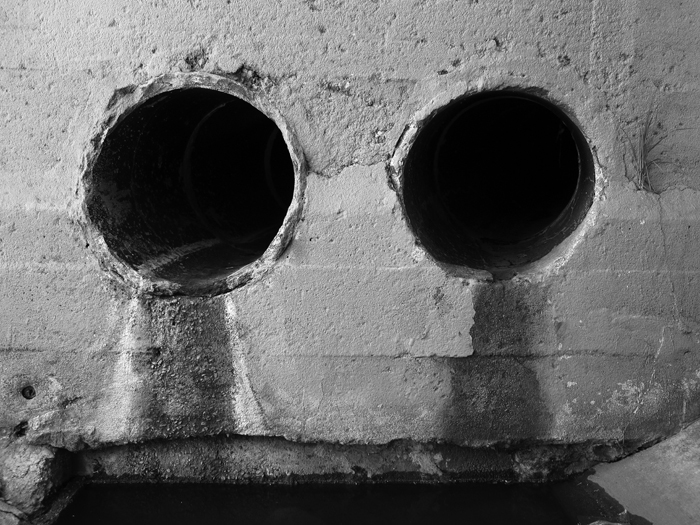
We began just north of Union Station, in the shadow of Coors Field, and made our way southwest along Delgany Street; it was a small stretch of land near the railroad tracks that development had missed (for now). We walked past a warehouse, past dirt lots just waiting for the right buyer. We stopped for a few minutes near an empty lot, where Robbie and Matt, our tour guides, reminded us to think about the meanings behind things we saw. At one point during the walk, Robbie pointed to an orange bottle cap in the dirt, explaining that he knew the group that handed out orange juice with just that color bottle cap. That piece of plastic on the ground was litter—but it was more than that too. It marked a place where someone had received help.
 Dinosaur tracks stretch across the former basin of the Purgatoire River in southern Colorado.Text and Photography by Robert Hurst
About 50 miles south of the Arkansas River, my dad’s Toyota was blasting across the washboard, rock-strewn surface of County Road M at a highly inadvisable velocity, throwing up a space shuttle-esque rooster tail of dust while hurtling straight into a black storm of tumbleweeds and swirling haze from multiple out-of-control wildfires. It was about that time that I started to question the wisdom of the whole adventure.
“We’re sure getting out here,” I said, becoming convinced we would never make it back. I imagined opening the spare tire compartment and finding nothing, or just a shriveled prune. Baby head-sized rocks slapped and crashed against the unprotected oil pan as the Toyota charged forward at highway speed. Are you crazy dad? Do you think our phones will work out here? Can you hear me now? The incredible volume of tumbleweeds pouring over the road and piling against the fences was at once frightening and mesmerizing, like some sort of biblical event. Where are they all coming from and how could there be any left? Where the hell are we going?
But dad knew exactly where he was going. Suddenly we were cruising into Picture Canyon, protected by improbable walls of sandstone. He stopped the car. Instantaneously our ears were filled with the deafening silence of gravel not pummeling the undercarriage.
By Tim Covi
Photography By Ross Evertson
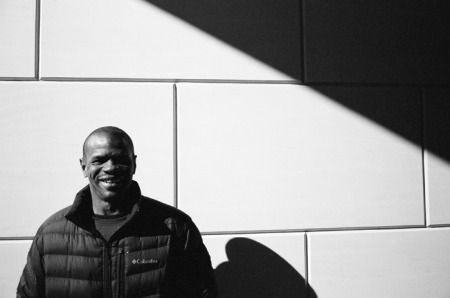
Since retiring in 1999, Braxton hasn’t dallied. He started two companies, finished his Bachelor’s degree, and is now going back to Metro State in the fall to start a Master’s of Social Work degree. With his eyes turned toward his legacy and what he can do to help others, Braxton is working with incarcerated youth in a Colorado Detention Facility. We talked to him about his second life since football and the changes he’s working to create in society.
By Travis Egedy
Artwork by Milton Melvin Croissant III
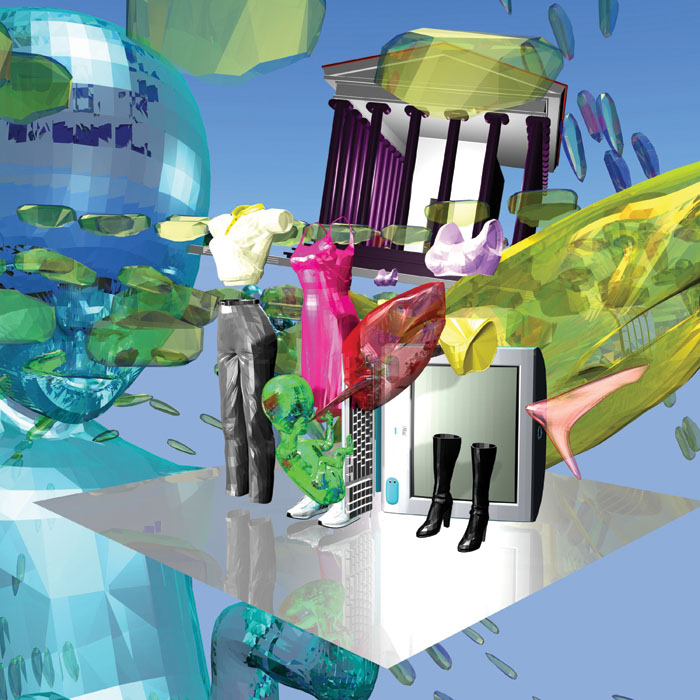
When I first met Milton Melvin Croissant III (known to his friends and family as “Buddy”) over six years ago, I immediately felt like he was the coolest guy in the room. Milton has been at the center of Denver’s experimental art and music underground since the earlier part of the decade. He was the lead singer for the local legendary synth-punk band, The Ultra Boyz, and was one of the founding members of Rhinoceropolis, a “Do It Yourself” art and performance warehouse space that for over six years has been the go-to place for all things weird, artsy, and unexplainable for Denver youth.
Rhinoceropolis has since grown to be a cultural institution both locally and nationally, seeing performances by artists and musicians traveling the world and making stops in its colorful glow. Milton is an exceptionally talented visual artist and musician who never fails to take it to the next level, whether through his bright and psychedelic drawings and paintings, his self described “wizard pop” music, his collections of hundreds of found VHS movies, or his experiments with digital media and technology which have become Milton’s main point of interest over the last year. I caught up with my old friend to talk about these interests after a picnic in a park in downtown Denver.
 By Chris Bolte
Illustration by Ross Evertson
According to a white paper produced by the Colorado Commission on Criminal and Juvenile Justice (CCJJ) in December, approximately 20 percent of Colorado’s prison population is behind bars for drug charges and 60 to 80 percent have drug abuse problems. With the budget deficit affecting programs across the state, CCJJ is making recommendations to reduce recidivism—repeat offenses that result in people returning to prison. A major focus will be improving treatment options.
The white paper cited a 2001 statistic from the National Center on Addiction and Substance Abuse (CASA) where out of every $100 spent on substance abuse in Colorado, only $0.06 cents goes to treatment—ranking Colorado 49th out of fifty states. Though spending has improved slightly, the 2009 average for all states was still only $2.38 going to treatment for every $100 spent. One method of combating both the inefficient use of resources spent on locking drug users up and the lack of funding for treatment was addressed in House Bill 10-1352. This bill effectively lowered most controlled substance sentences while increasing fines. Bill Kilpatrick, Golden chief of police and commission member, said that saving money from these reductions was not, in itself, enough. Putting that money into treatment services is equally important.
 Nick Brown reads the Bible every morning to begin his dayText & Photography by D. Giles Clasen
For most of Nick Brown’s life the thing standing between him and true love was a deep belief in God.
“It occurred to me that the word ‘gay’ might apply to me when I was fifteen,” Brown said. “I was terrified. Just terrified. I’ve never prayed so much in my life. ‘God, take it away, take it away, take it away,’” he said. “I’d known that I was attracted to guys. I’d just never really realized that that attraction was also sexual.”
For Brown, who is deeply religious, being gay and Christian became a defining struggle in his life, a source of confusion and empowerment, but the process has not been perfect. Nor is it complete.
Brown’s life is like a narrative exploration of one question: is it possible to be gay and Christian? According to a 2009 Gallup poll, 78 percent of Americans identify as Christian, putting this question at the heart of many people’s lives.
And churches fall on all sides of the issue. A Canadian organization called the Ontario Consultants on Religious Tolerance (OCRT), which publishes the website religioustolerance.org, have been following the debate closely. Their website lists the positions of 47 Christian denominations in North America. “Of the thousands of Christian denominations in the United States, it is the mainline faith groups who are most actively discussing homosexuality,” OCRT said.
 By Kristin Pazulski
Photography by Scott Dressel-Martin
Artist Melanie Yazzie has been creating paintings, sculptures and prints for years, pulling from her experience growing up in the Navajo Nation in Ganado, Arizona. Also an associate professor of art at the University of Colorado, Boulder, Yazzie has traveled extensively, and she makes it a point to visit schools when she travels, to introduce cultures to a real “Native American” to break the stereotypes.
While some of her work is created to educate people about her culture, her current exhibit at Denver Botanic Gardens, “Story Keeper,” on display until May 8, features pieces that are both reflective of her childhood and interpretations of the beauty she found in the Gardens.
Yazzie, who lives outside Boulder but often visits her family in the Navajo Nation, took time from her artist’s talk on March 10 to sit in the high-ceilinged Gates Garden Court gallery to chat about her work and “Story Keeper.”