Veo Preserves Micromobility for All in Denver
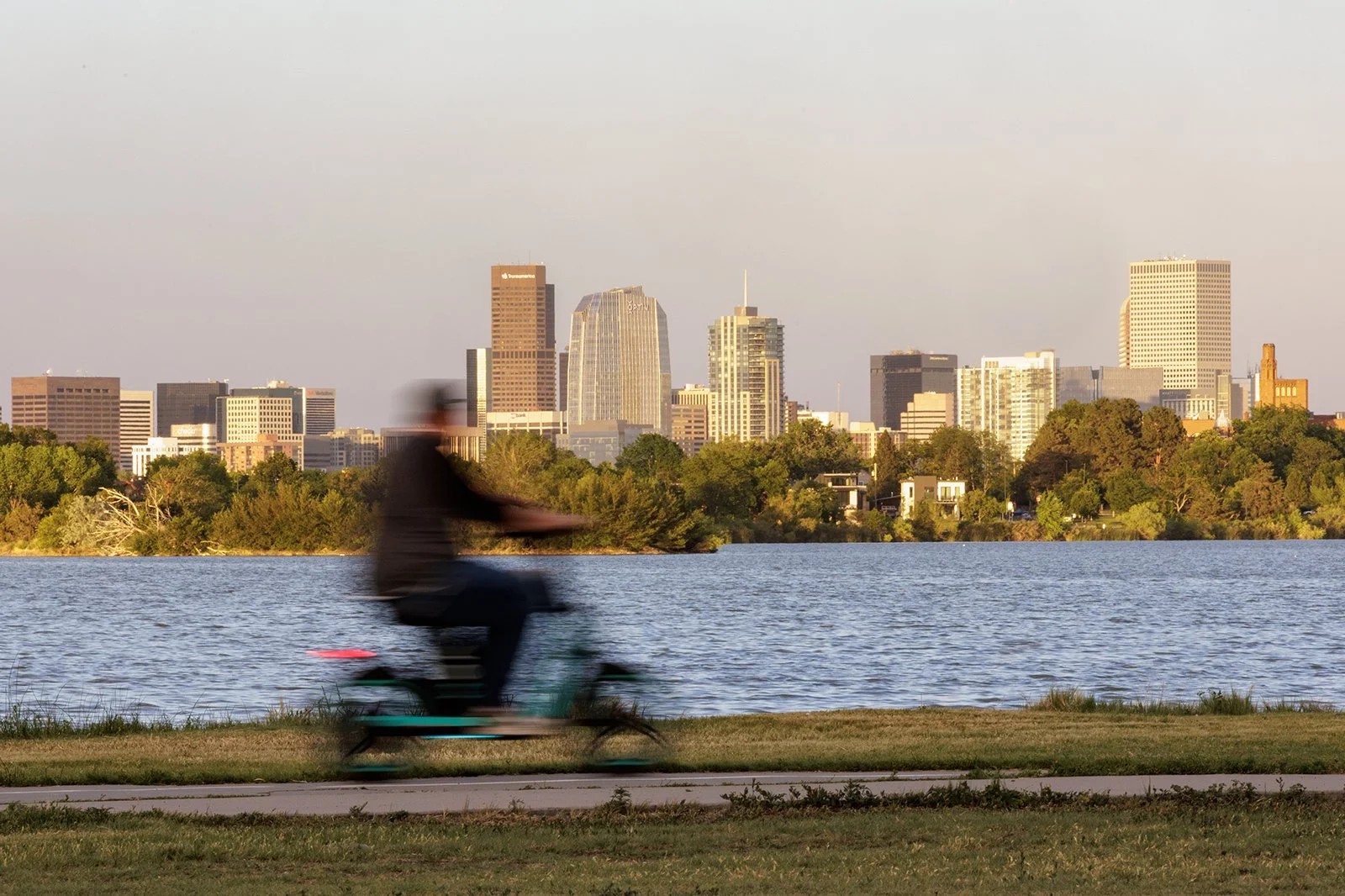
Daniel Kalne rides his rented Veo around Sloan’s Lake.
Story by Giles Clasen and Robert Davis
Photos by Giles Clasen
Micromobility programs have been a lifeline for Daniel Kalne.
Kalne became homeless in 2024 after he and his girlfriend broke up and he moved out of their shared apartment. Afterward, Kalne relied on Lime scooters for transportation until he could get a car. Kalne logged 526 miles over 403 rides using the Lime program and said he signed up for Veo’s program as soon as he possibly could.
But his micromobility journey didn’t stop there. Even when he had a car, Kalne sometimes used scooters to save money on gas.
“We live in an urban infrastructure that is built around cars, that is built around having a personal vehicle,” Kalne said. “And when you don’t have that, the struggle is real. You’ve got to trudge very, very, very far to meet your essential needs. And having those scooters was critical to making all of that so much easier.”
When Denver made the decision to kick micromobility companies Bird and Lime out of the city, some people experiencing homelessness, like Kalne, worried that they would lose access to a low-cost and reliable transportation option.
That was until Denver’s new micromobility partner—Veo— came to town.
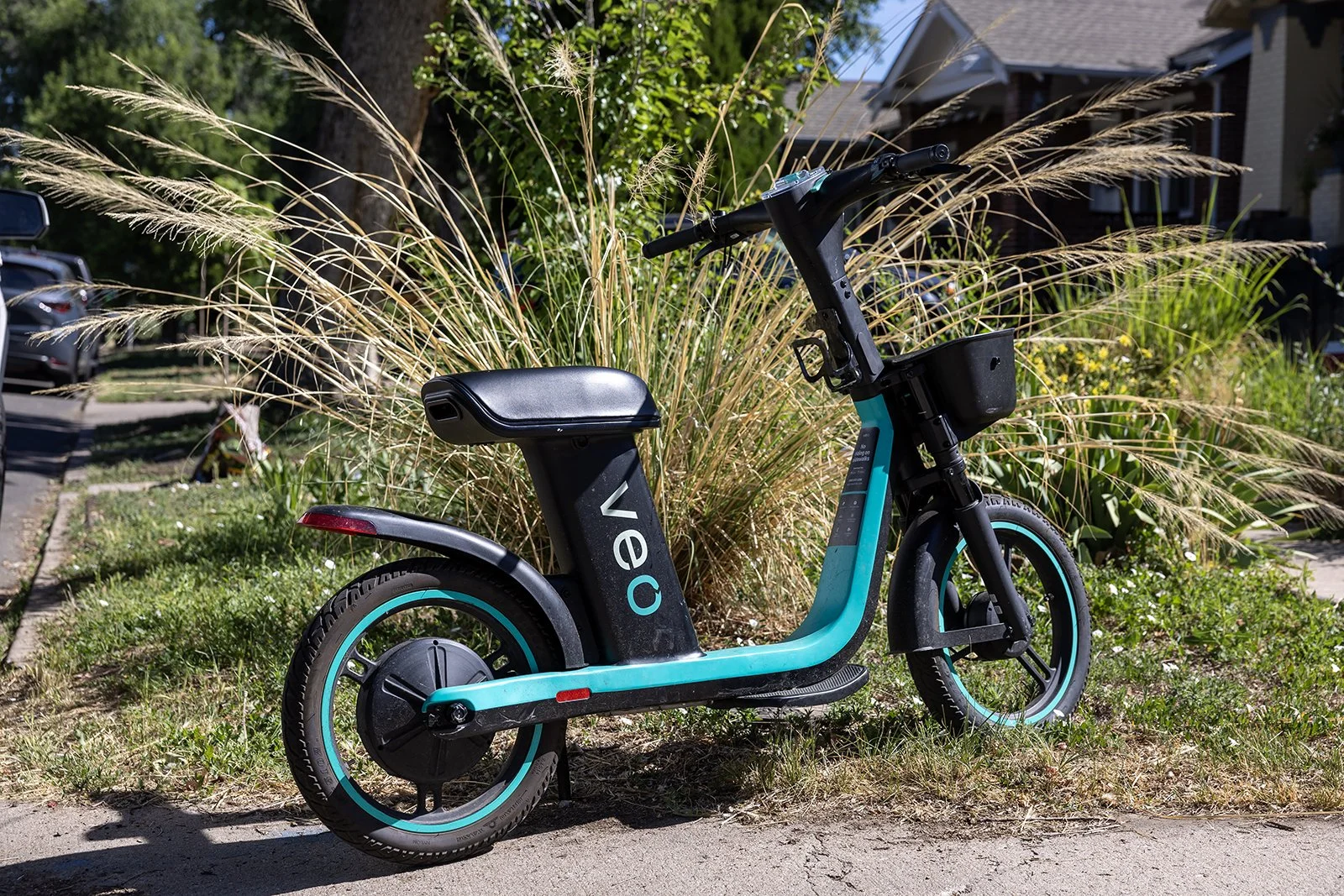
Dockless scooters can help unhoused individuals safely travel through some of Denver’s most dangerous corridors for walking and biking.
People earning low-to-no income can access Veo’s mobility services through the Veo Access program. Riders who enroll in the program receive an hour of free rides per day with no limit on the number of rides. Riders can also unlock additional time for $0.15 per minute compared to the $1 unlock fee and $0.25 per minute charged to other riders.
To qualify for Veo’s program, participants must submit a Colorado-issued photo ID showing proof of address. They must also submit proof of participation in a federal or state public assistance program such as the Supplemental Nutrition Assistance Program, Medicare or Medicaid, or a housing voucher program.
Riders previously enrolled in the Bird or Lime low-income ridership programs can also qualify. Last year, Lime estimated that about 15,000 people were subscribed to their low-income access program.
If someone doesn’t have a smartphone, they can also contact Veo’s call or text line to unlock the bikes and scooters, and there is a way for people without bank accounts to pay as well. Nathan Pope, the shared bike and scooter program manager at DOTI, told Denver City Council in March that Denver’s priority during the transition between providers is to ensure people who were signed up for Bird and Lime’s low-income access programs get switched over as soon as possible.
“Those are the folks that we are going to be prioritizing,” Pope said.
Kalne guesses he was among the first to sign up for Veo’s low-income access program because he didn’t want to lose access to the scooters, even for a short period.
He added that micromobility options helped him save time and energy when getting food, accessing other resources, or going to job interviews. Sometimes, Kalne would spend an hour walking to get food when he was homeless, and the constant walking was exhausting.
Veo estimated that it processed more than 51,000 low-income ridership applications across its markets in 2025. Alexander Keating, Veo’s vice president of policy and partnerships, told City Council that the company is investing in expanding its technical and staffing capacity to streamline the application process.
Veo was selected as Denver’s new micromobility partner after the thousands of dockless bikes and scooters from Bird and Lime caused an uproar. They were initially deployed in the city without authorization, leading to strife between city leadership and the companies, Denverite reported.
That experience informed Denver’s approach to crafting its micromobility laws, which now allow the city to fine the companies for rider behavior and require them to offer subsidized rides for low-income riders.
Denver announced plans to replace Bird and Lime with Veo in December 2025 and approved a three-year agreement with the company in late April 2026. Veo—which operates in markets spanning from Los Angeles to Washington, D.C.—has deployed a fleet of over 7,200 electric bikes and scooters, with plans to ramp up to about 9,000 vehicles by the end of summer.
Kalne said Veo’s program works well, though he noted some tradeoffs.
According to Kalne, Lime’s program allowed three rides a day, each lasting up to 30 minutes. But each ride required a break, and if the rides were short 10-minute trips, the day’s limit was reached.
Veo offers a single 60-minute daily pass. Kalne found Veo’s structure more forgiving in practice, since shorter trips don’t eat into a ride cap as much as they did with Lime. Three quick 10-minute rides under Veo still leave 30 minutes available for the day.
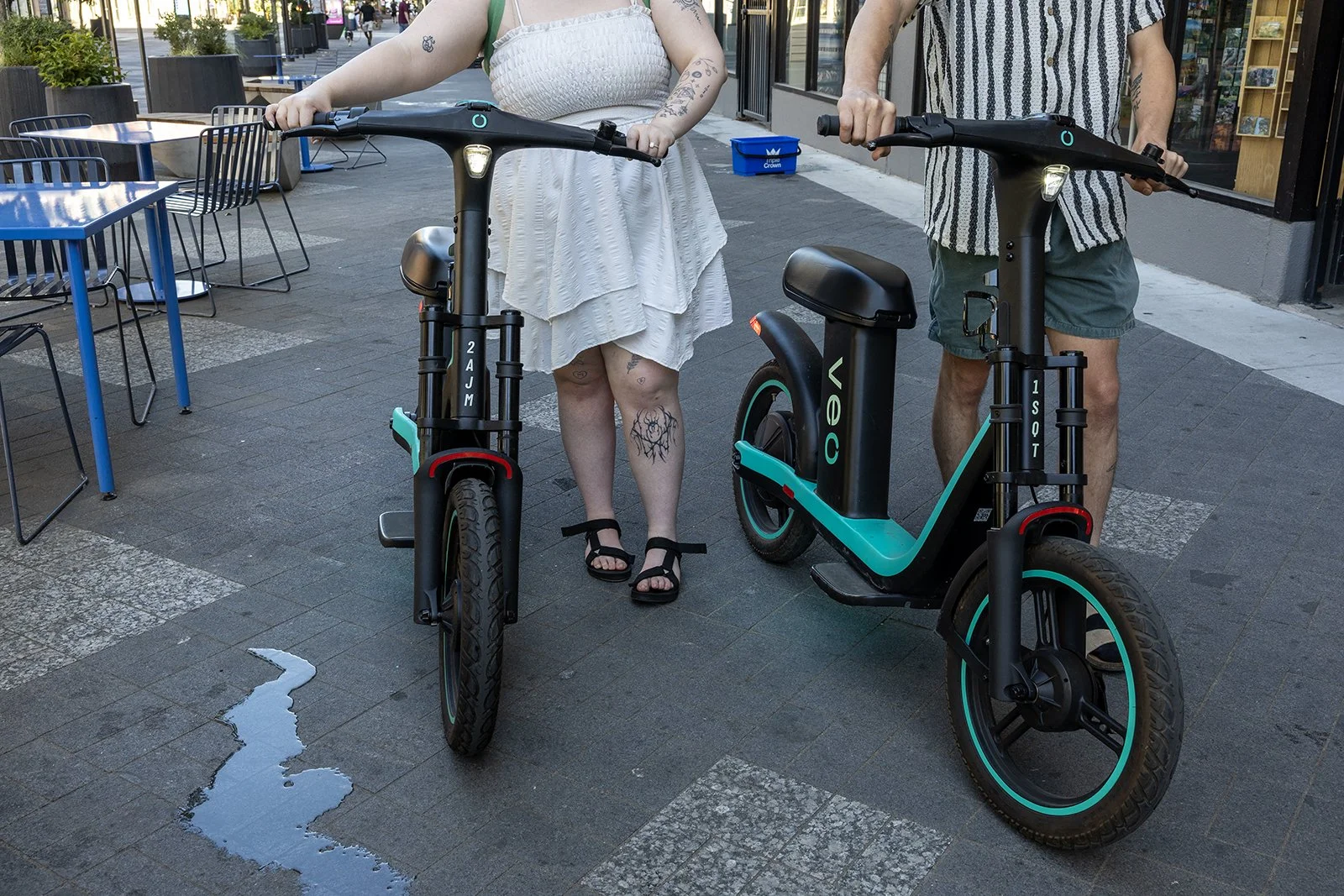
If someone doesn’t have a smartphone, they can contact Veo’s call or text line to unlock the bikes and scooters.
The Department of Transportation and Infrastructure estimates that micromobility options like Veo’s bikes and scooters can also reduce the number of vehicle trips on Denver’s roads by up to 15,000 a day. At the peak of summer, it can shave off as many as 40,000 car trips, according to DOTI.
Micromobility options are also a vital mode of transit for people experiencing homelessness. A 2025 study conducted by Denver Streets Partnership found that people who are homeless frequently use micromobility options to get to appointments, housing opportunities, and job interviews.
Dockless bikes and scooters can also help people who are homeless safely travel through some of Denver’s most dangerous corridors for walking and biking, such as Colfax and W. Evans Ave.
“Increasing general micromobility access across Denver would be beneficial for countless unhoused community members,” the report reads in part. “Specifically, increasing the amount of micromobility devices at and near crucial destinations for unhoused community members is needed immediately.”
Kalne has found housing, secured a job, and owns a car. He still uses Veo’s services when necessary, and he enjoys the small luxury of riding the scooters to get outside and relax. The scooters offer him a low-cost form of entertainment as he continues to rebuild his life.
“I have a vehicle now, but I was kind of feeling down in dire straits tonight, and I just stopped by Sloan Lake to ride around the park and have a good time and view the sunset and feel better,” Kalne said