
‘They shot and killed someone in broad daylight!’ Protesters line Broadway after ICE shootings spark national outrage
Photos and Story by Giles Clasen
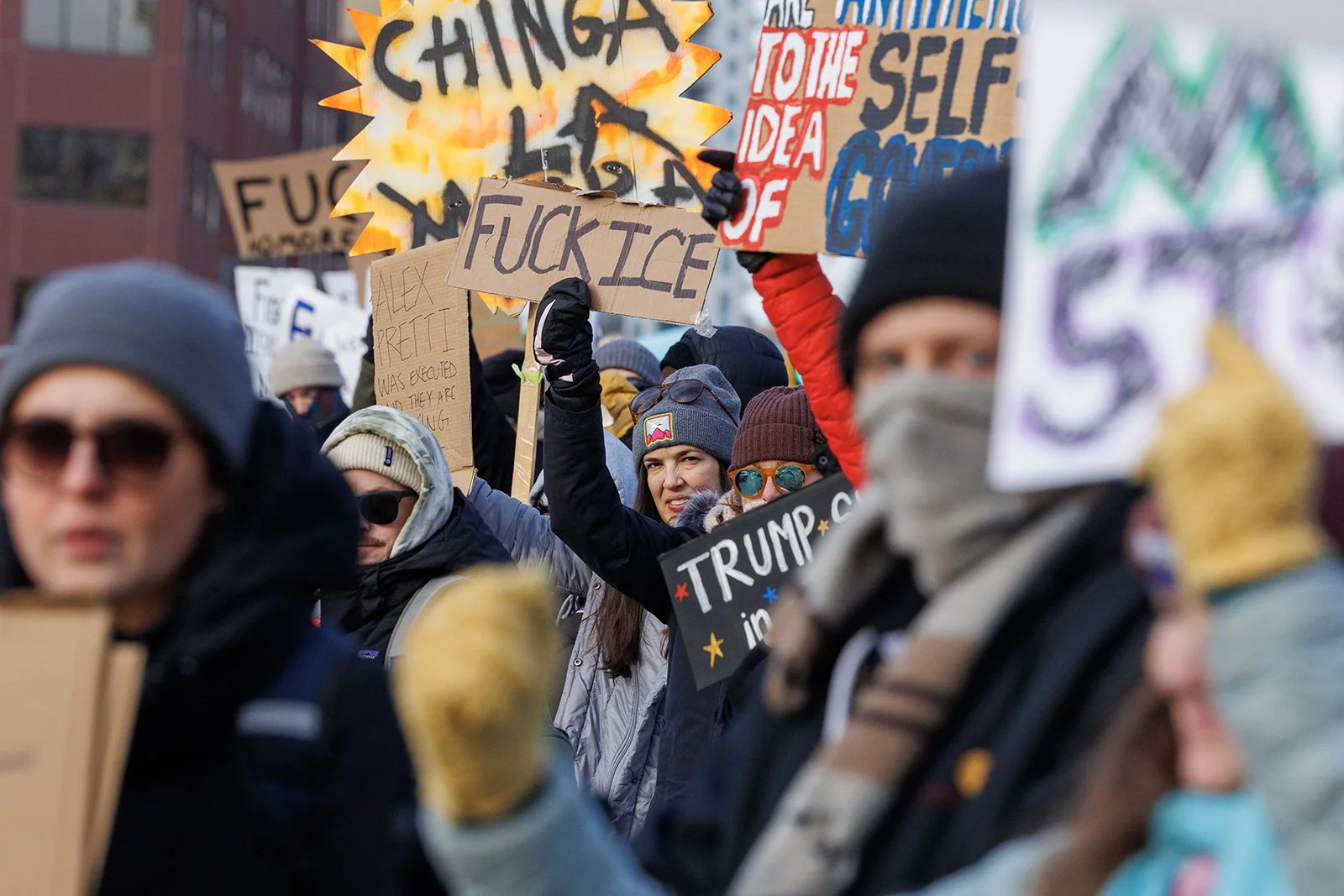
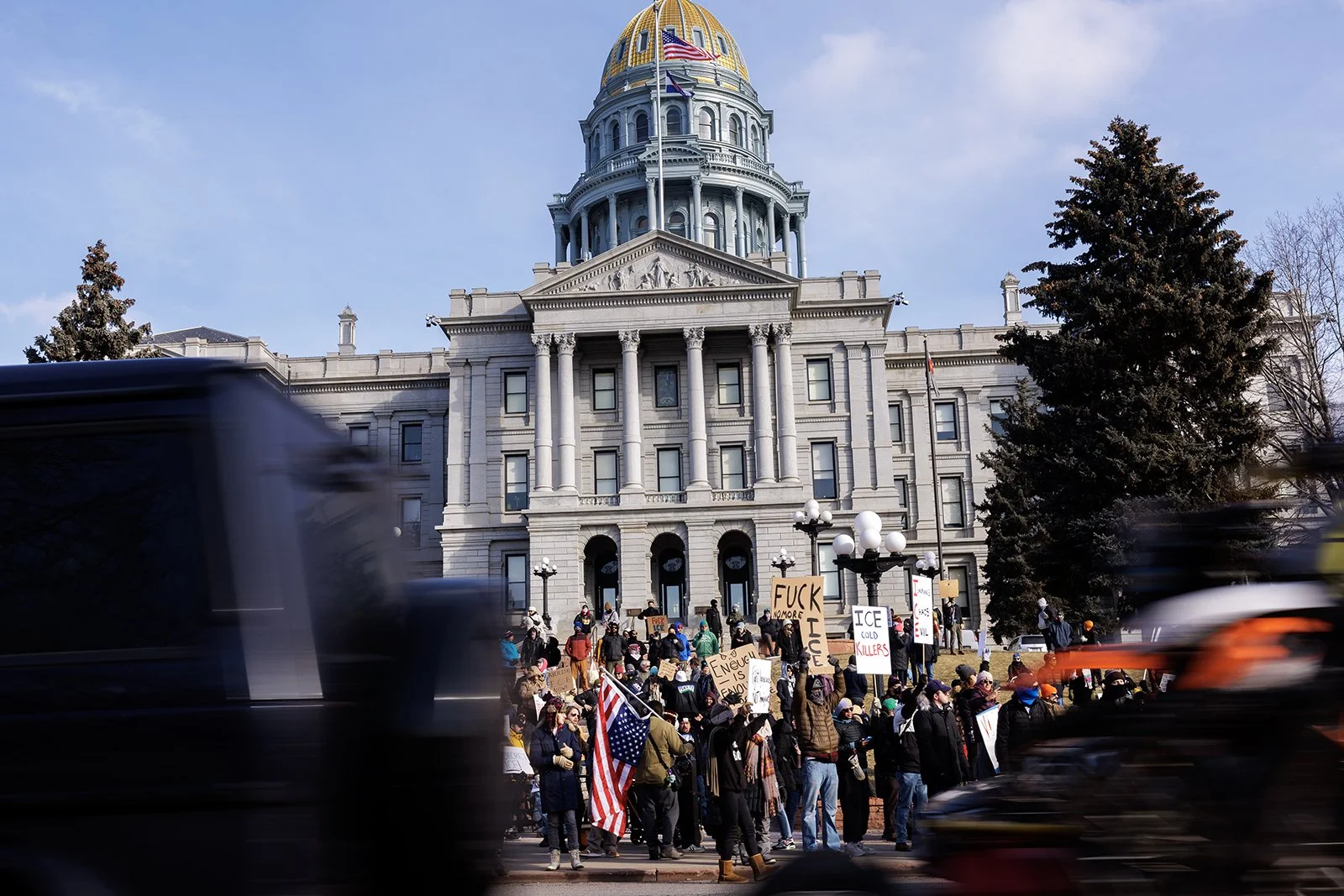
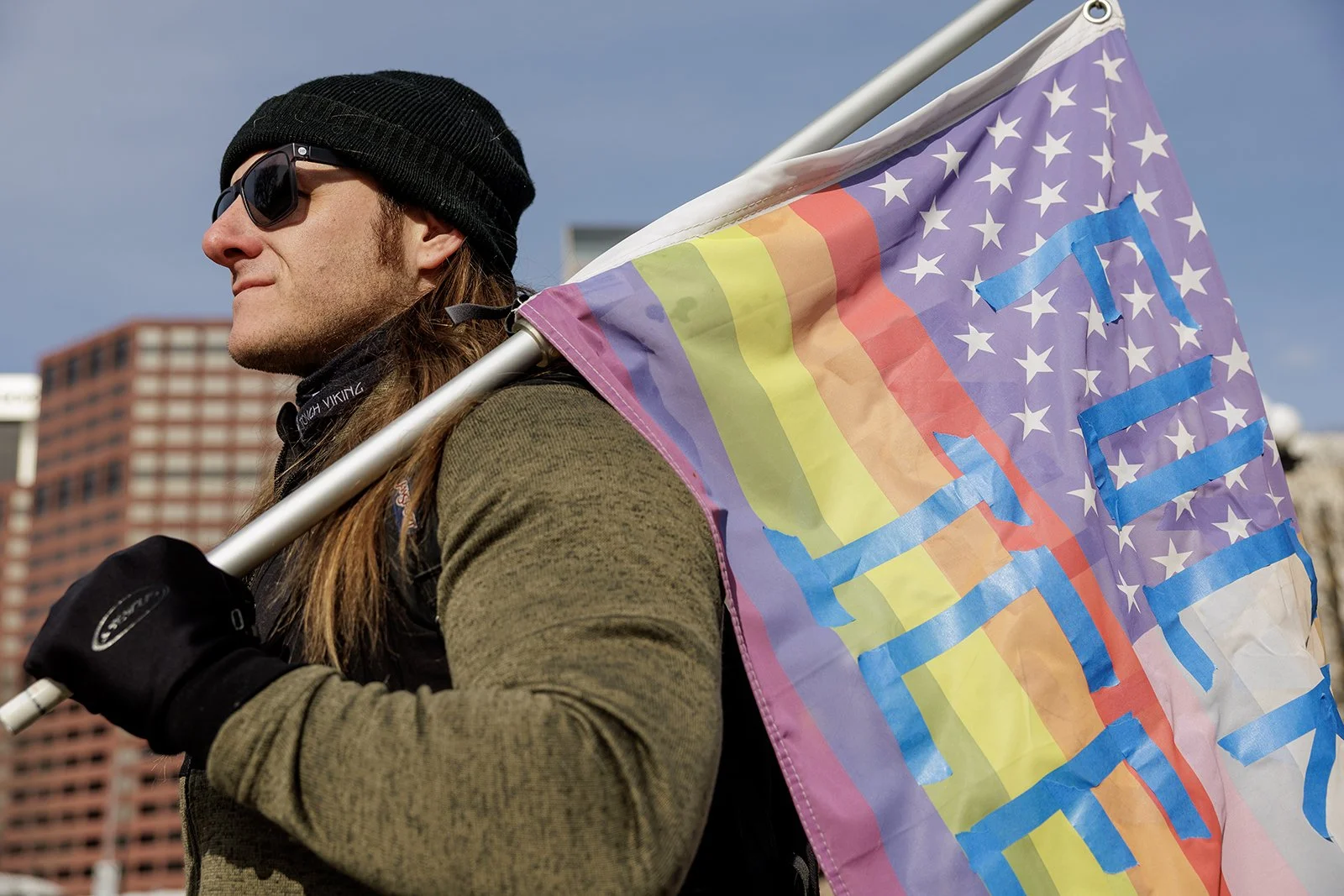
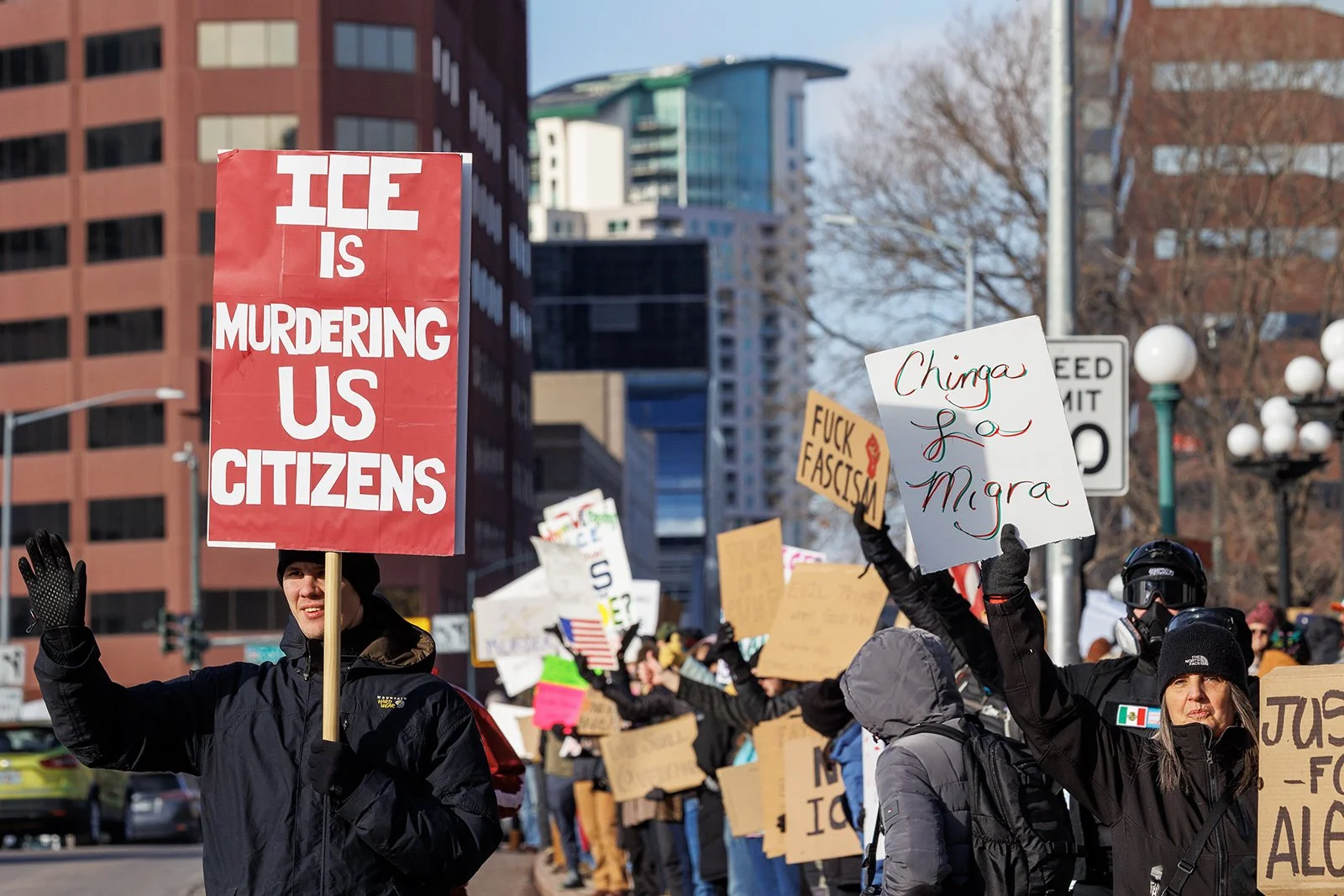
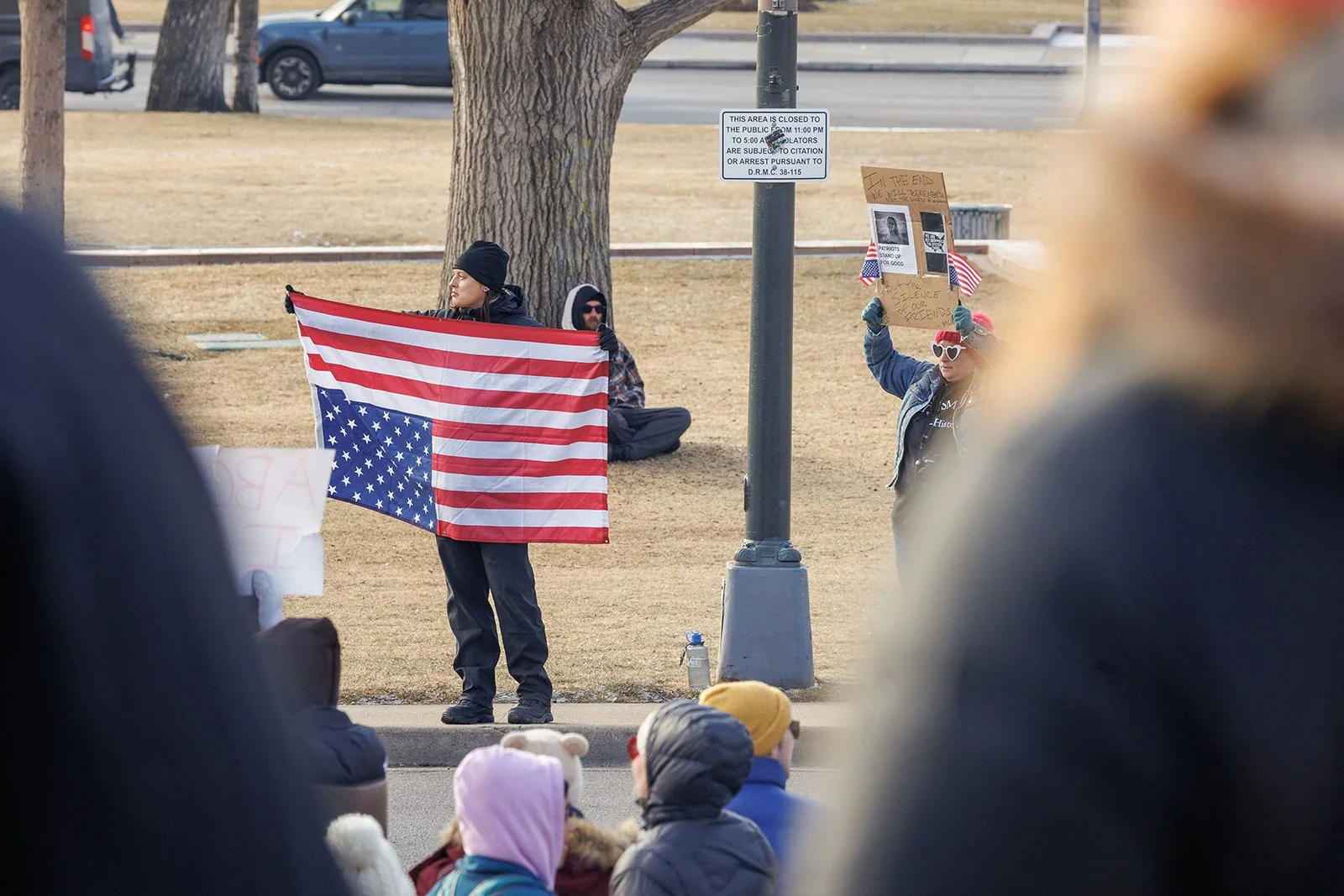
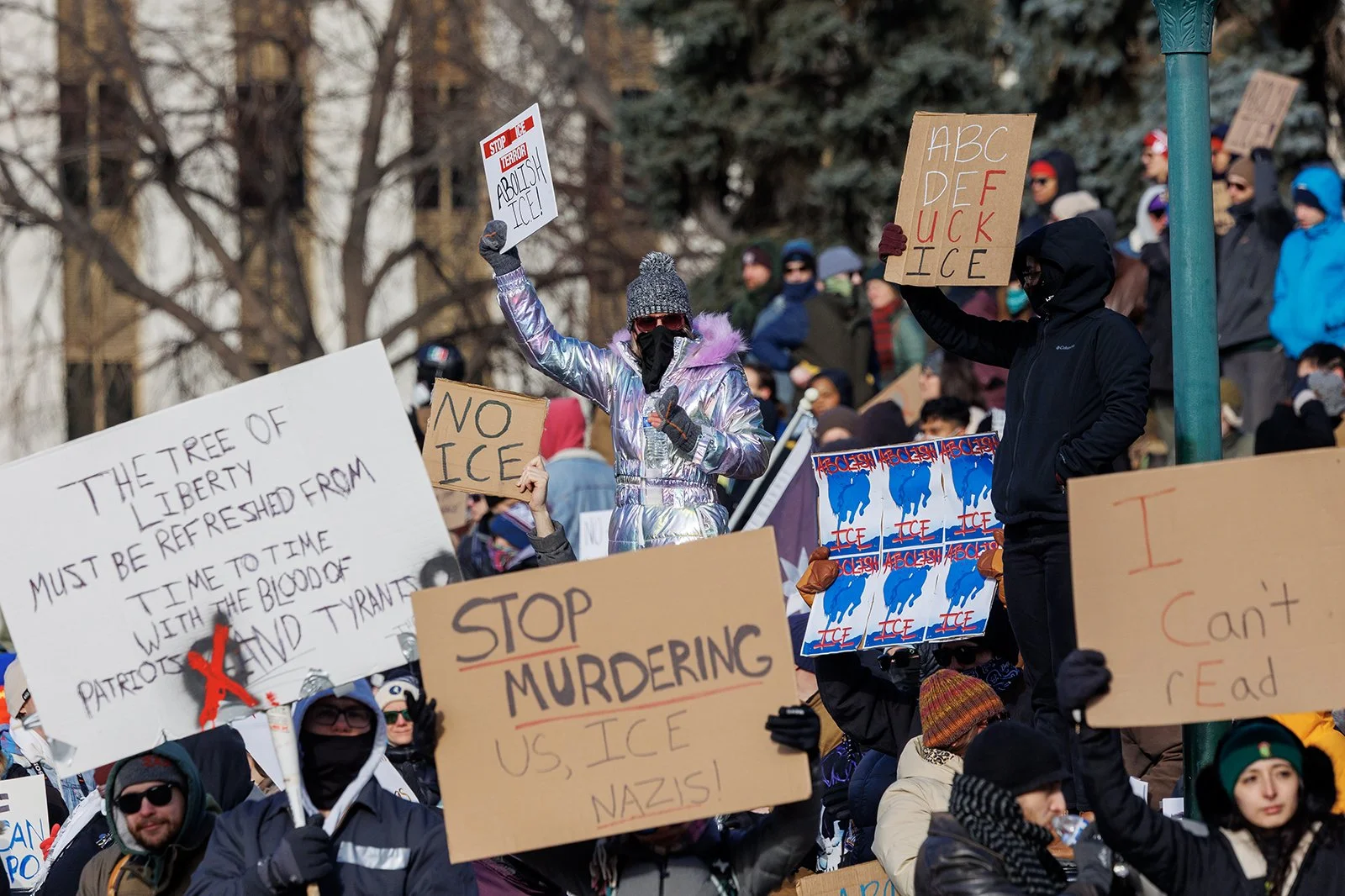
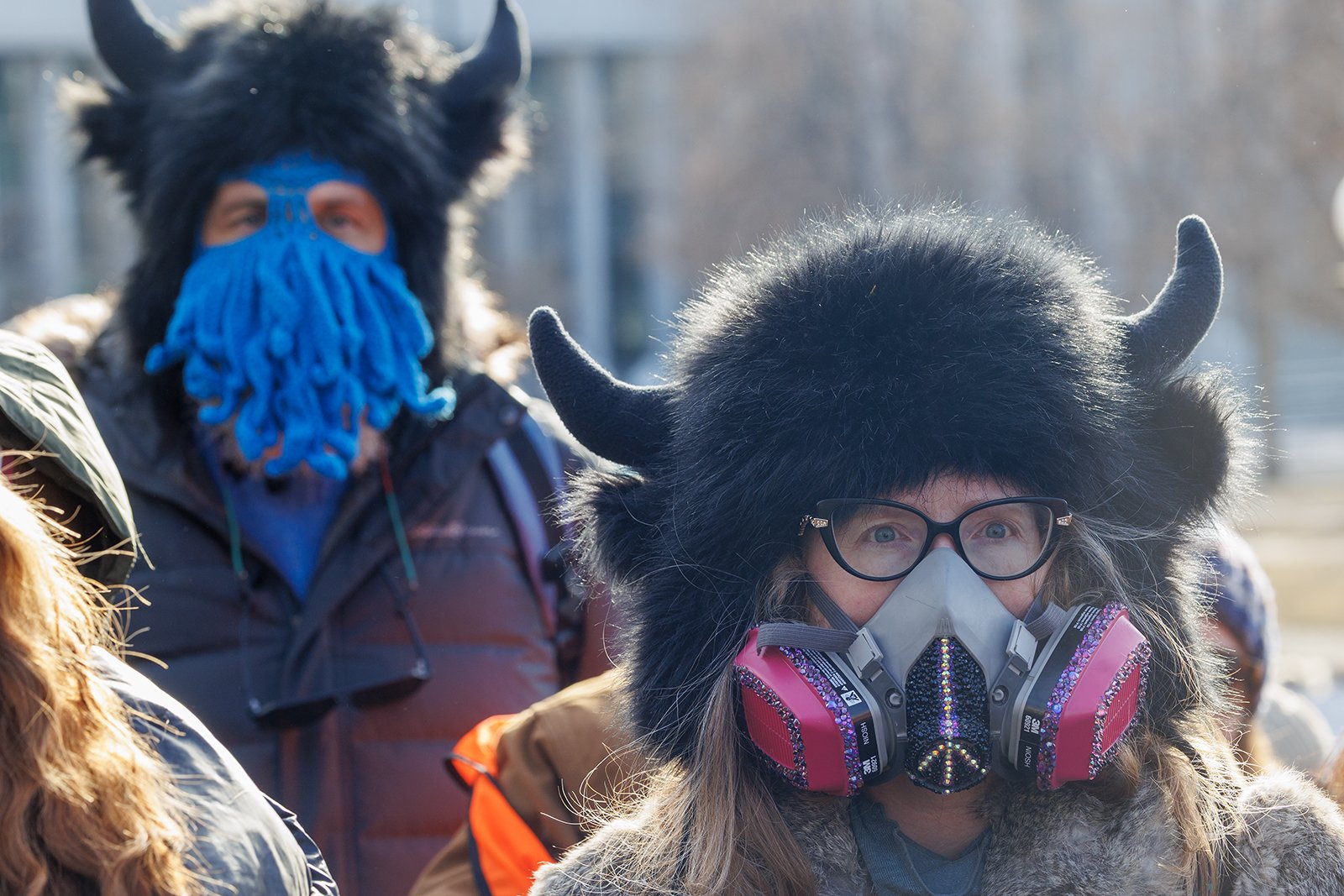
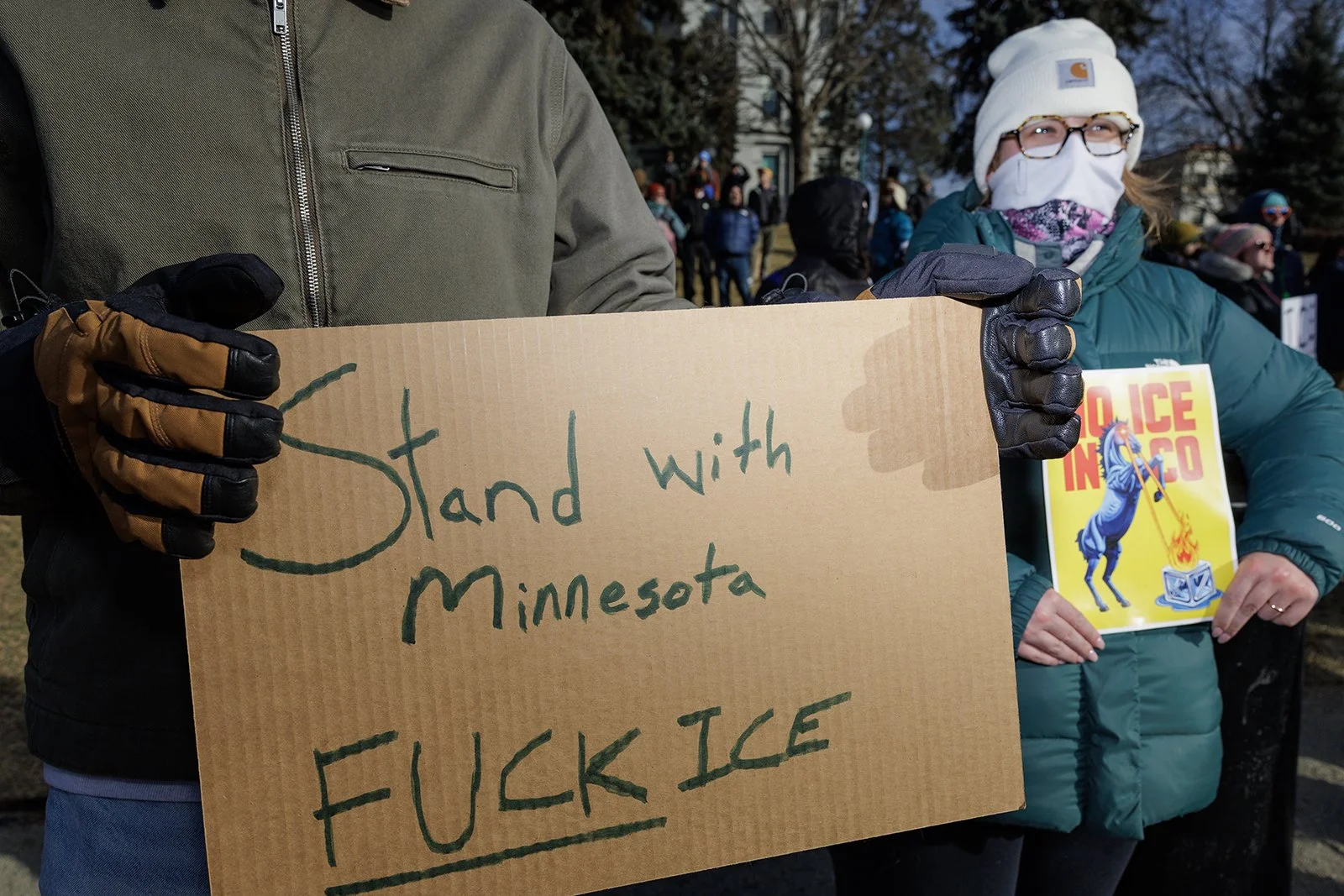
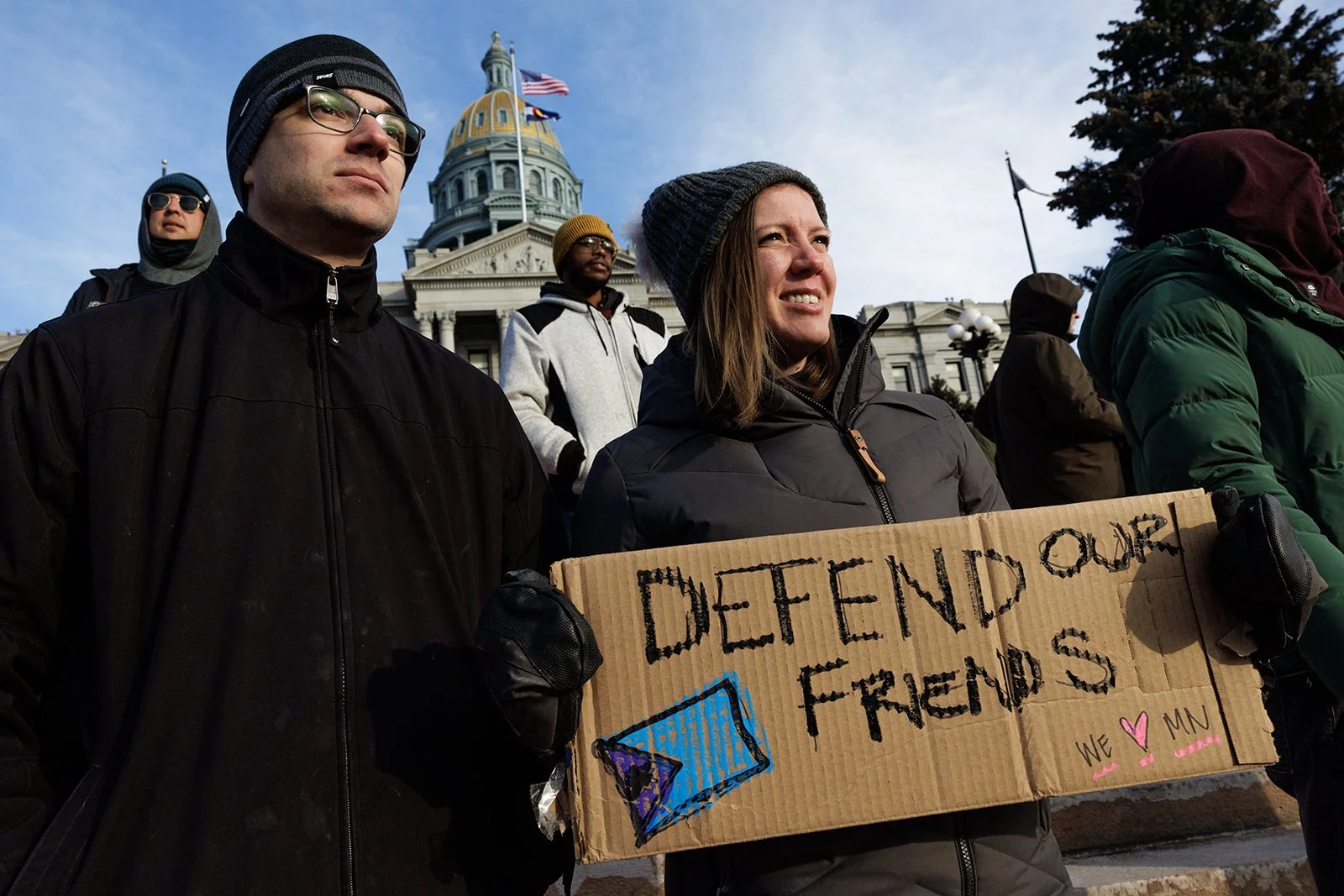
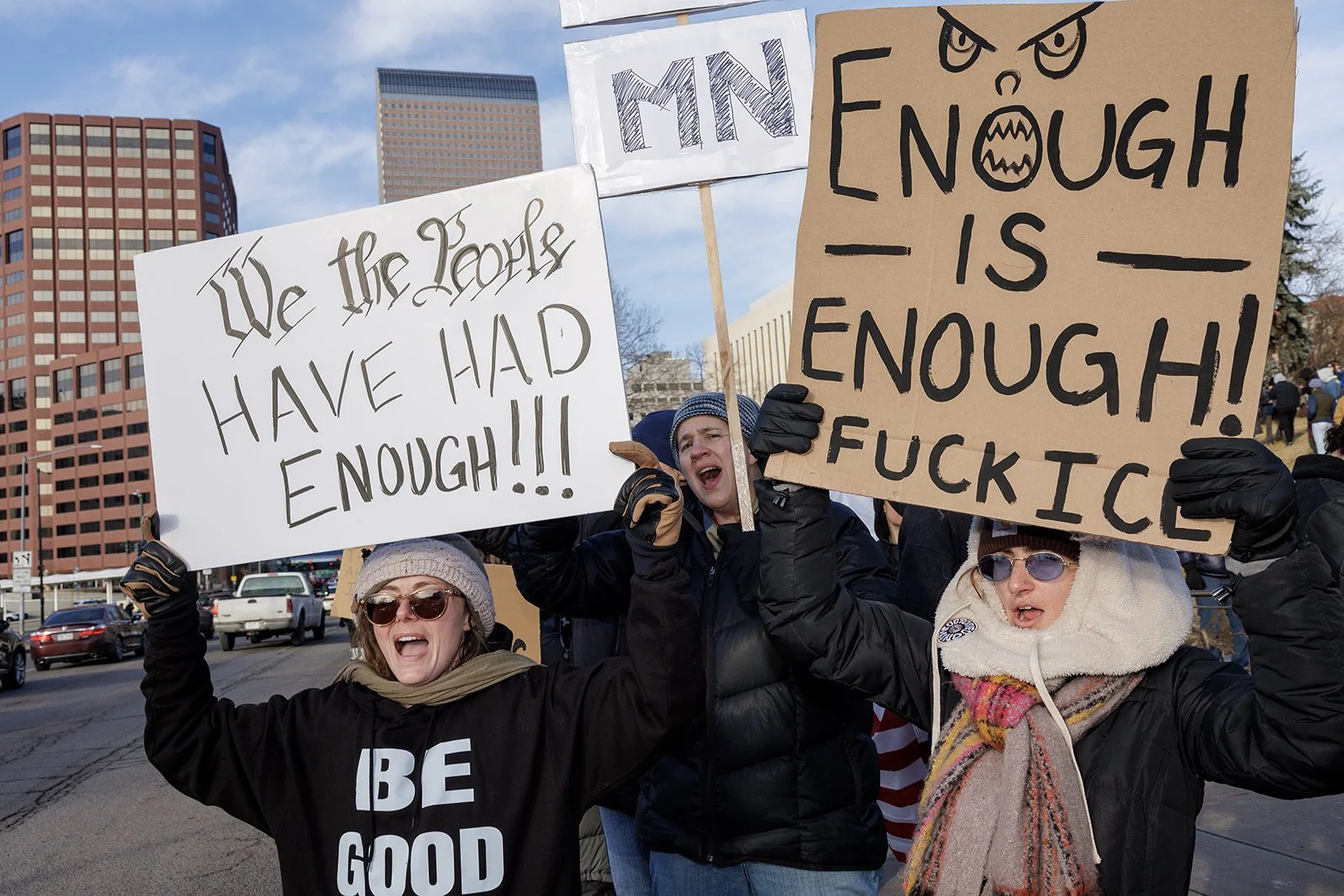
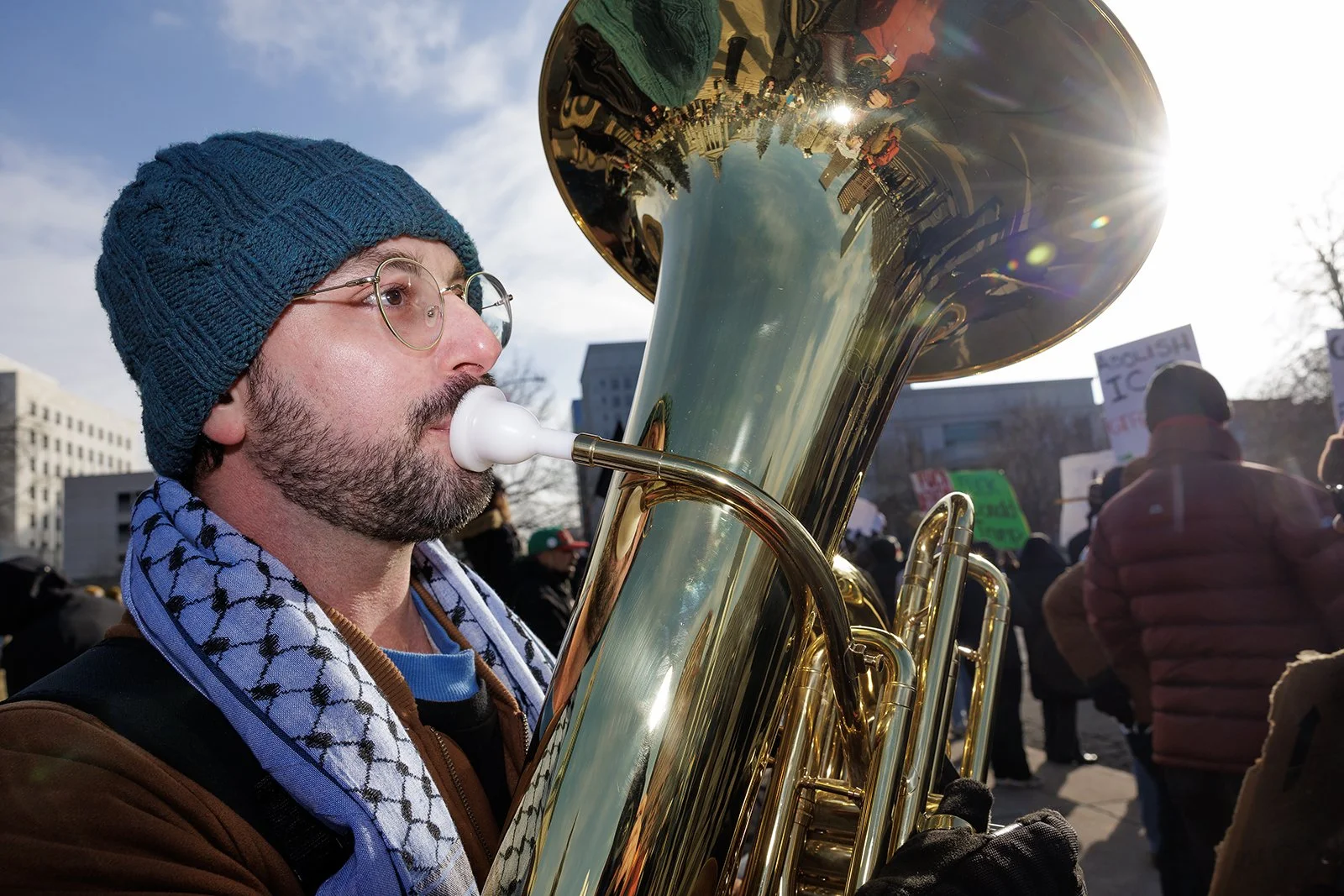
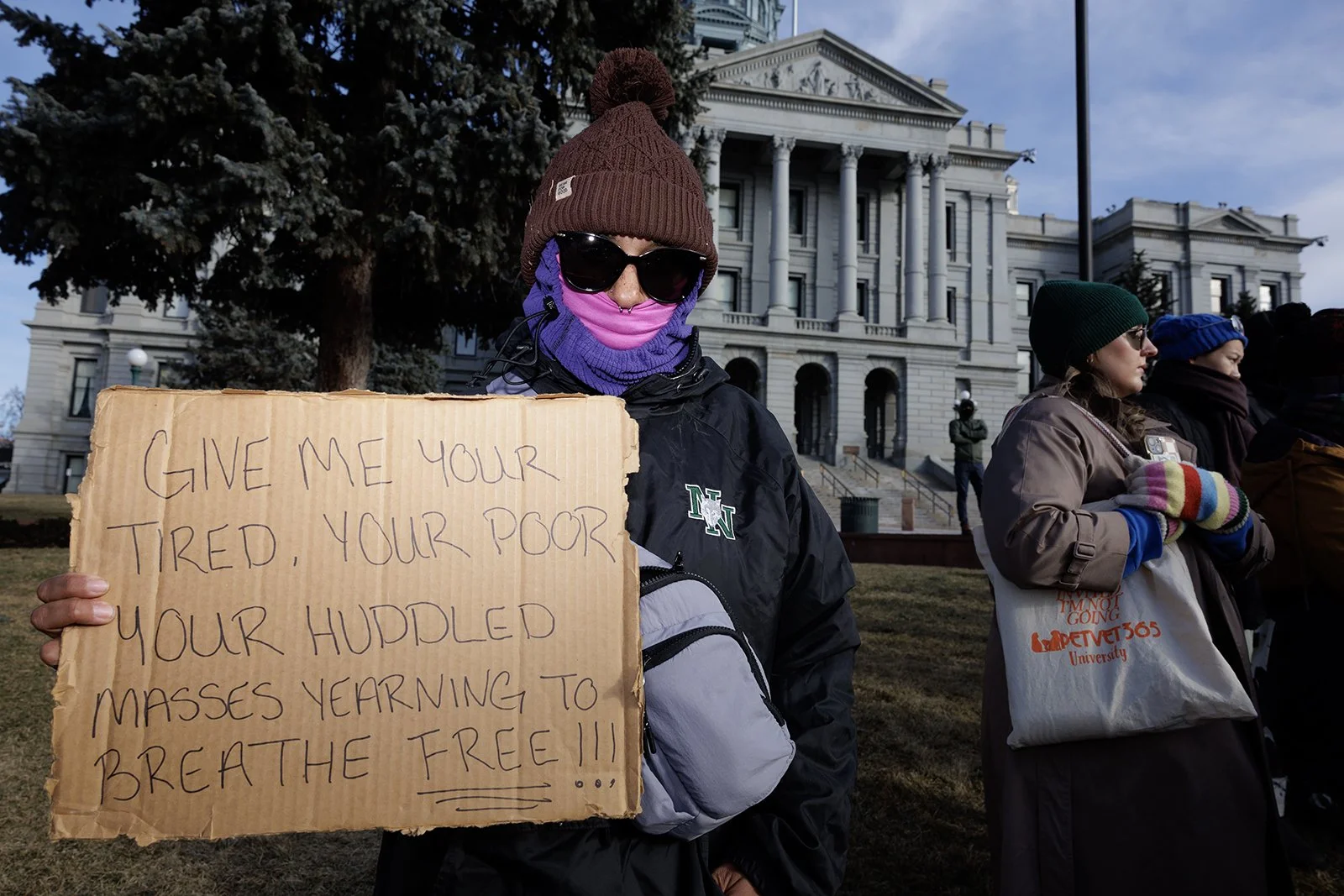
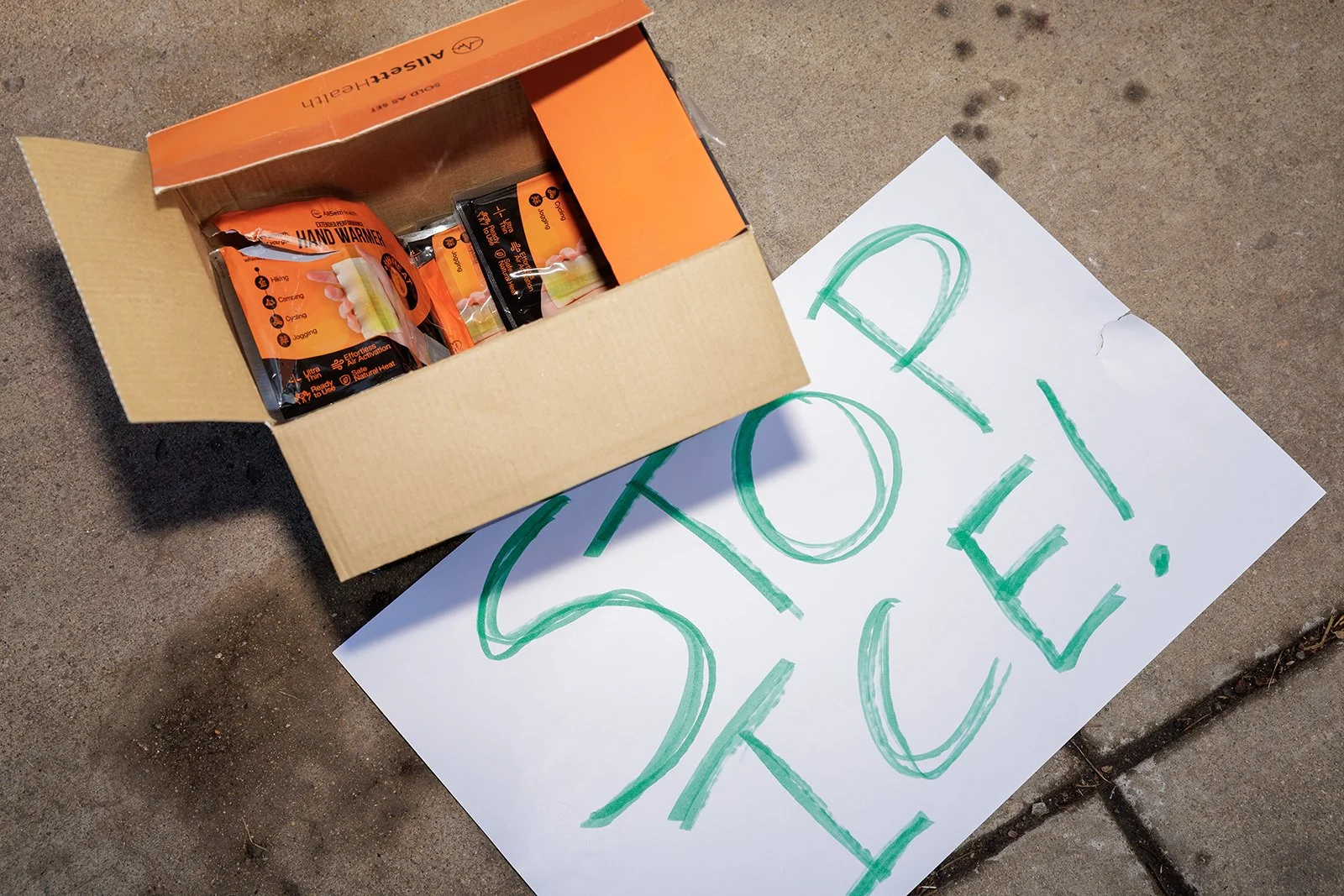
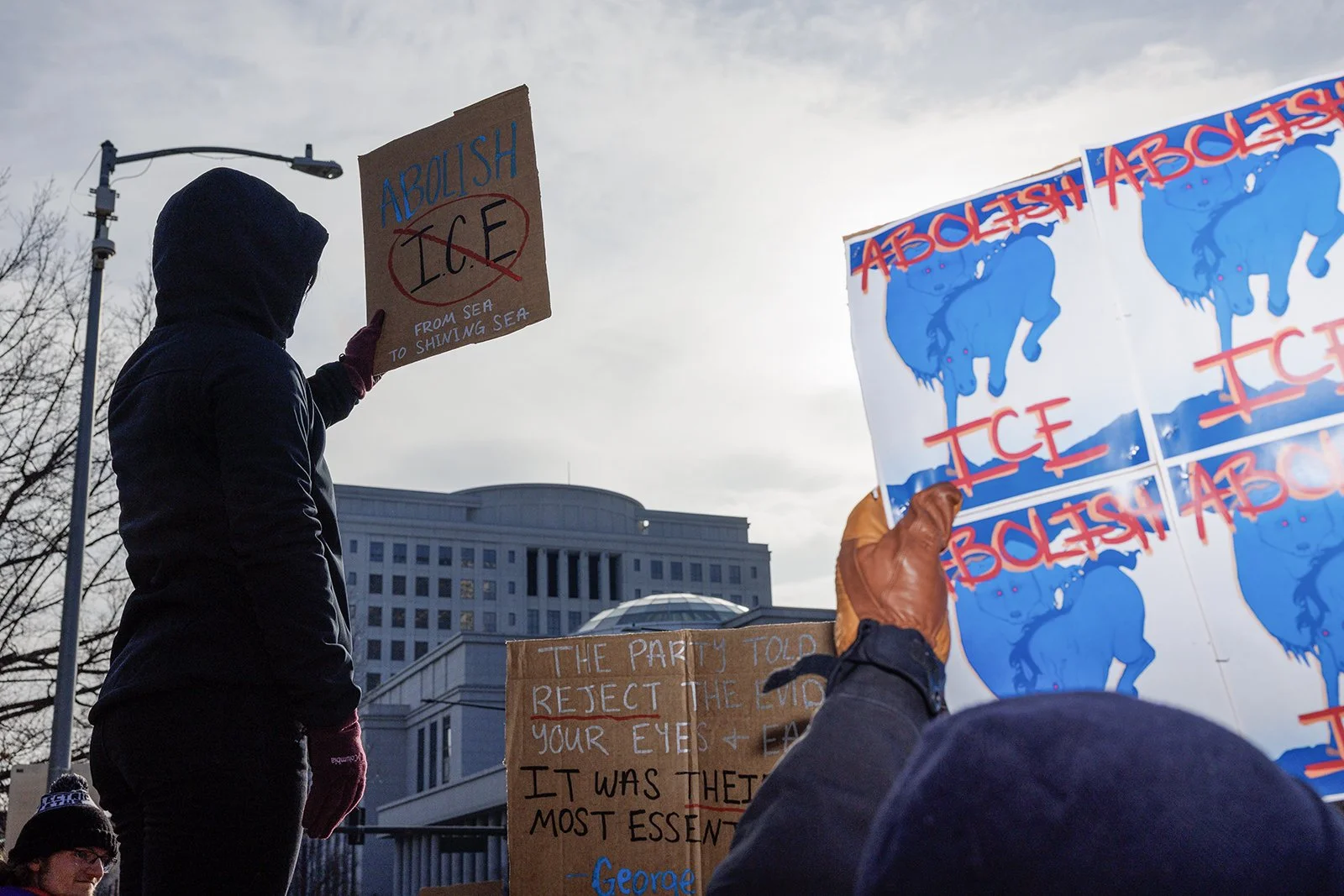
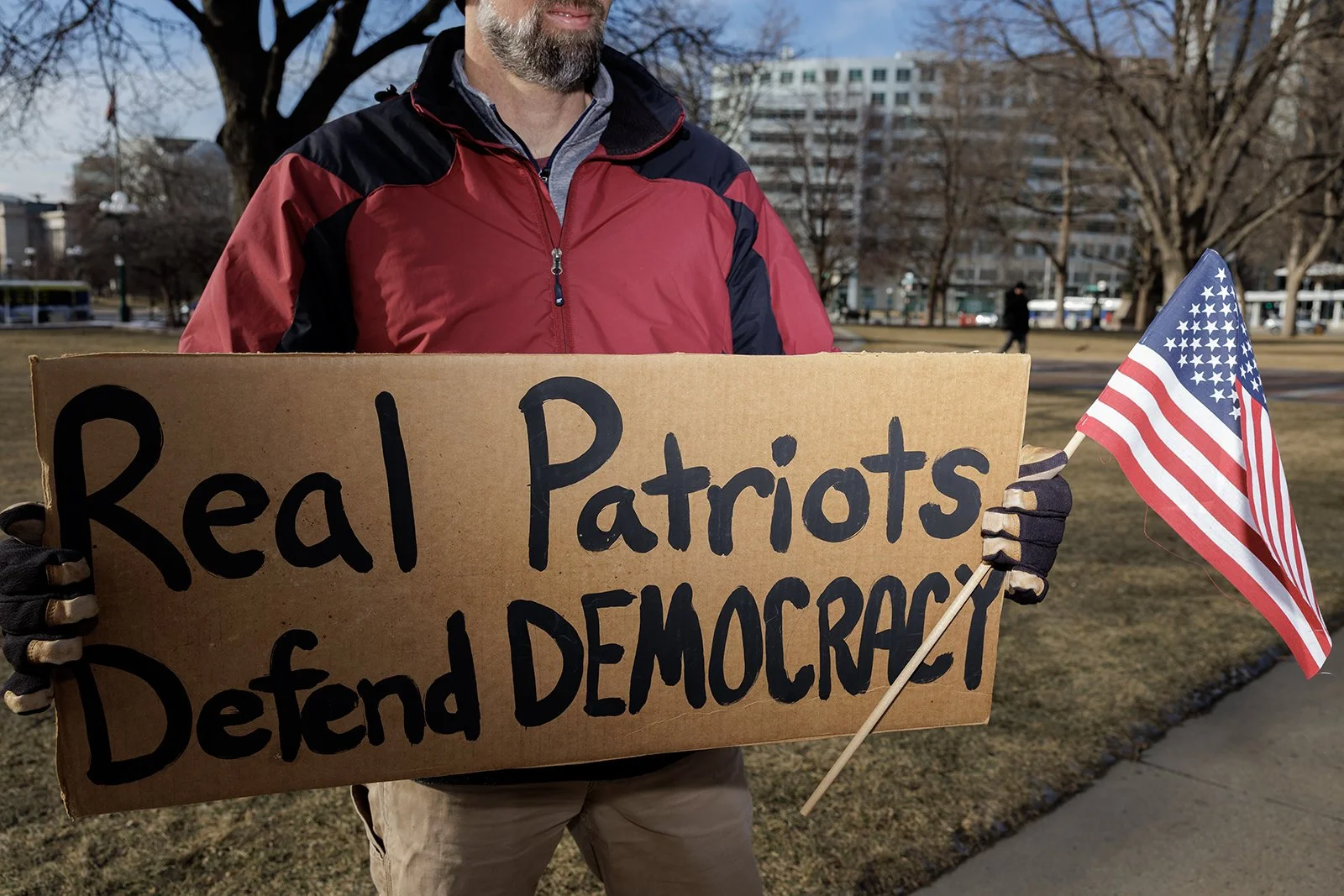
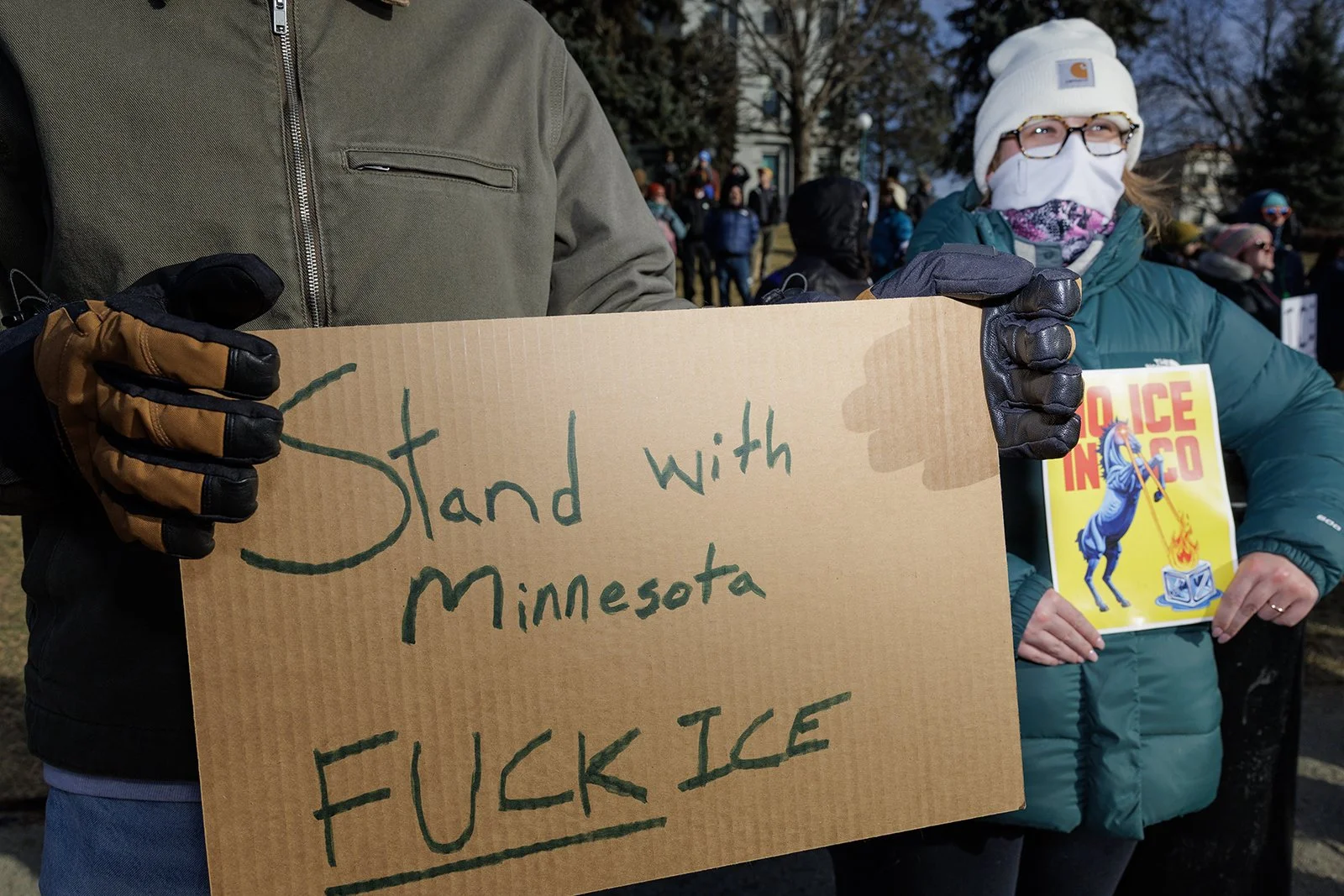
Nearly 1,000 people braved freezing temperatures Saturday, Jan. 24, for a peaceful protest in front of the Colorado State Capitol, the same day that Alex Pretti was shot and killed by ICE agents in Minneapolis, Minnesota, after he stepped between an ICE agent and a woman being pepper-sprayed.
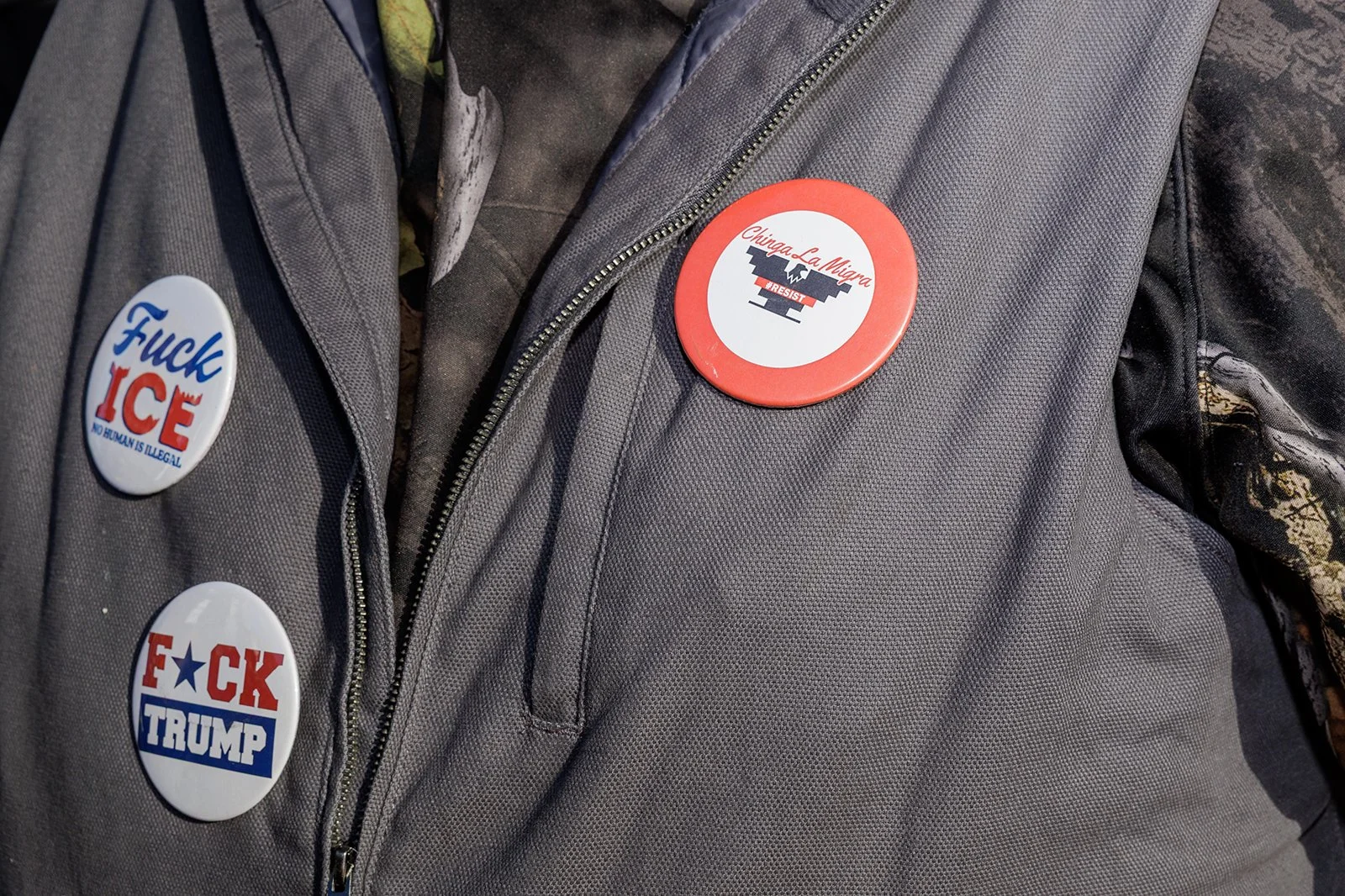
Demonstrators held handmade signs and chanted as traffic passed, calling attention to what they described as an unchecked and illegal use of force after federal agents fatally shot Pretti and Renee Good, both with ties to Colorado, in the past month, prompting protests from coast to coast.
Demonstrations across the country have called for accountability and limits on federal enforcement tactics, along with abolishing ICE.
“I’m here today just because what ICE is doing is absolutely wrong,” said Gabby Vigil, a second-generation Mexican American. “They shot and killed someone in broad daylight, after they completely disarmed him. What they’re doing is completely unacceptable and illegal. People need to be angry. They need to stand up for what’s right.”
Vigil said immigration enforcement has reshaped her family’s daily life. Her grandmother immigrated to Mexico years ago. Her father was the first in her family born in the United States.
“My grandmother doesn’t go out,” she said. “We’re staying inside. With brown skin, you’re scared you could be arrested or shot, even if you are here legally or you’re a citizen. They’re racially profiling people right now, and it’s a risk to all of us.”
She said she is angered by narratives that immigrants are responsible for crime.
“I’m so tired of the narrative that immigrants are criminals,” Vigil said. “That we come here and commit crimes when that’s not true. I want more people to be angry. I want more people to speak up.”
The National Institute of Justice, a division of the United States Department of Justice, has published studies demonstrating that immigrants commit crimes at significantly lower rates than citizens.
Nearby, nurse Hannah Wolf held a sign reading “Nurses for Jeffrey.” She said she came out after learning that the man killed in Minnesota on 1/24 was a registered nurse.
“It just spoke to me that he was a registered nurse like I am,” Wolf said. “He was just there trying to help people, and he was murdered for it.”
Asked whether she believes what happened could happen to anyone, Wolf didn’t hesitate.
“Definitely,” she said. “If it could happen to a 37-year-old white male that’s a registered nurse, I think it could happen to anyone in America right now.”
She emphasized that ICE's actions are a risk to the lives of citizens, immigrants, and individuals from all backgrounds and cultures.
For AJ, who asked to be identified by only his first name for fear of retaliation by federal agents, protesting was about speaking up before it’s too late.
“If you don’t speak up now and speak up when people are getting trampled in Minnesota, who’s going to speak up for you when it eventually comes to your home state?” he said. “We’re not paid to be here. We’re not domestic terrorists. We’re doing the most American thing there is, protesting your government.”
AJ said he believes Denver and Colorado could be President Donald Trump's next target. He described himself as largely untouched by recent policies but said privilege made silence unacceptable.
Brian Loma said he had been doomscrolling, watching videos from Minnesota in disbelief, before the protest.
“They’re supposed to be focusing on violent criminals,” he said. “Instead, it’s indiscriminate who they target.”
Loma said the number of shots fired, reported as 10, showed zero concern for human life.
"They're just killing people, executing people in the streets, and it's not the Crips or the Bloods. It's the Department of Homeland Security,” he said.
Sandra Brooks said fear is now a constant companion. She experienced homelessness during the COVID-19 pandemic and again in 2025 after she was forced to move out of her daughter's home, and she said that government actions now feel even more threatening.
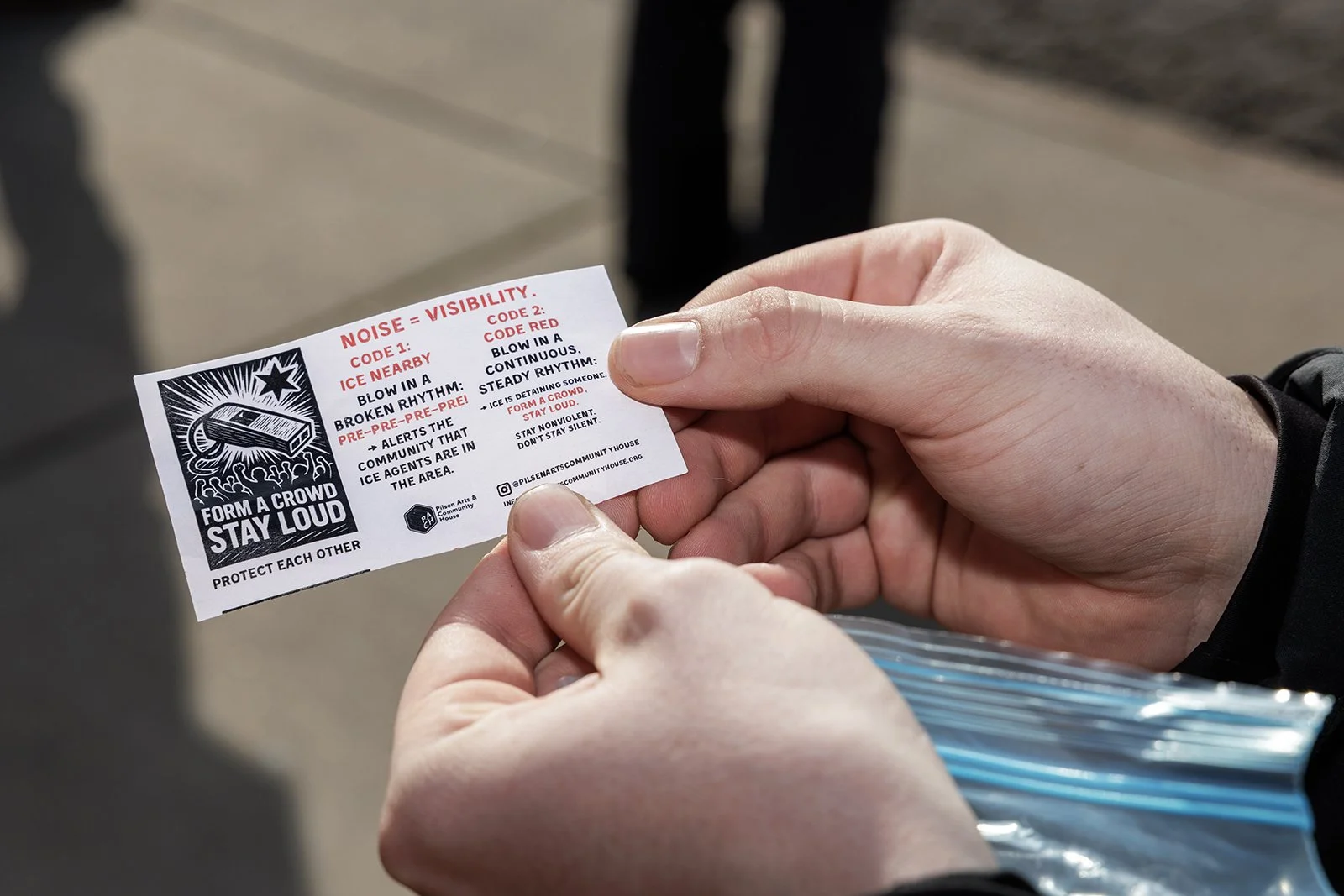
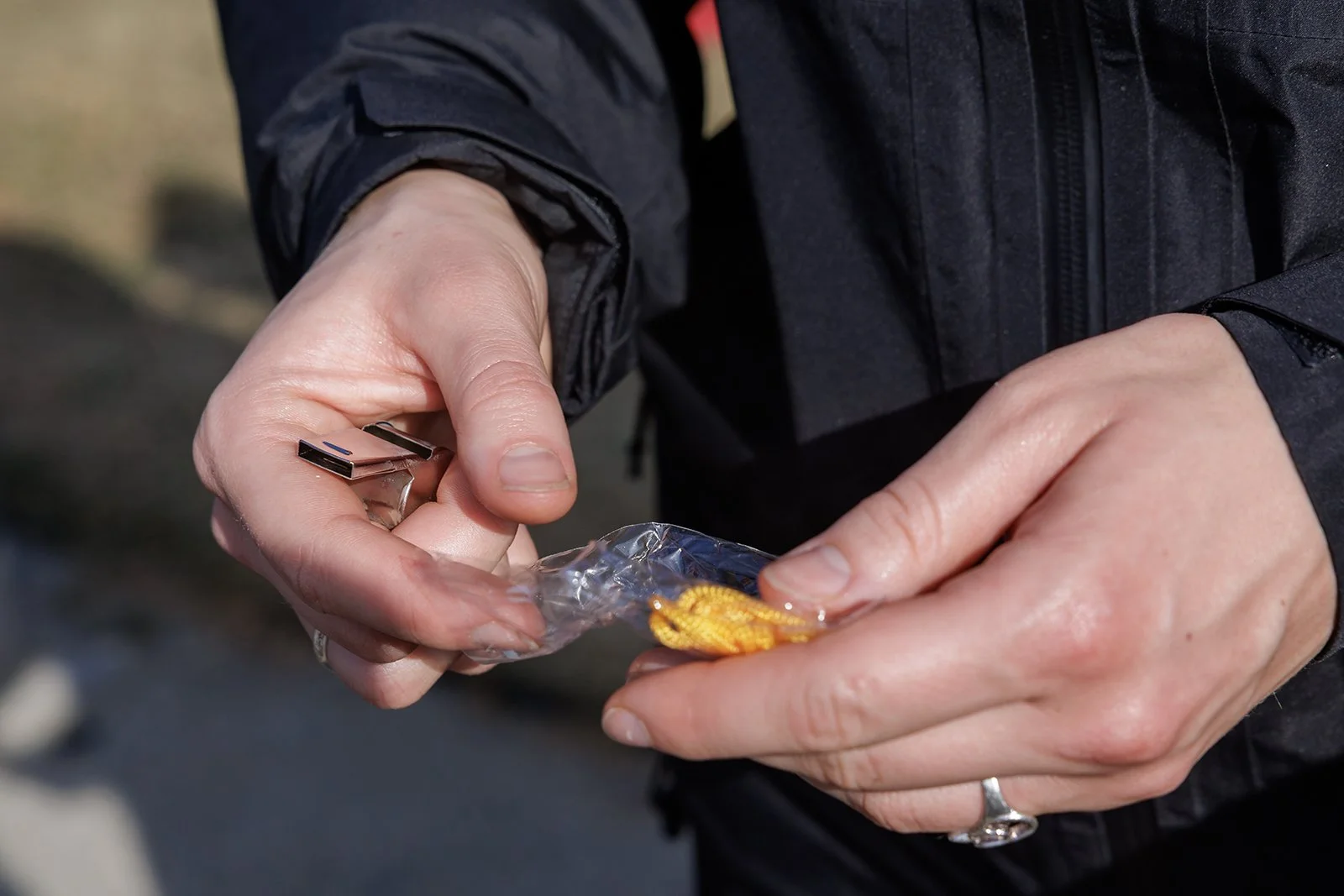
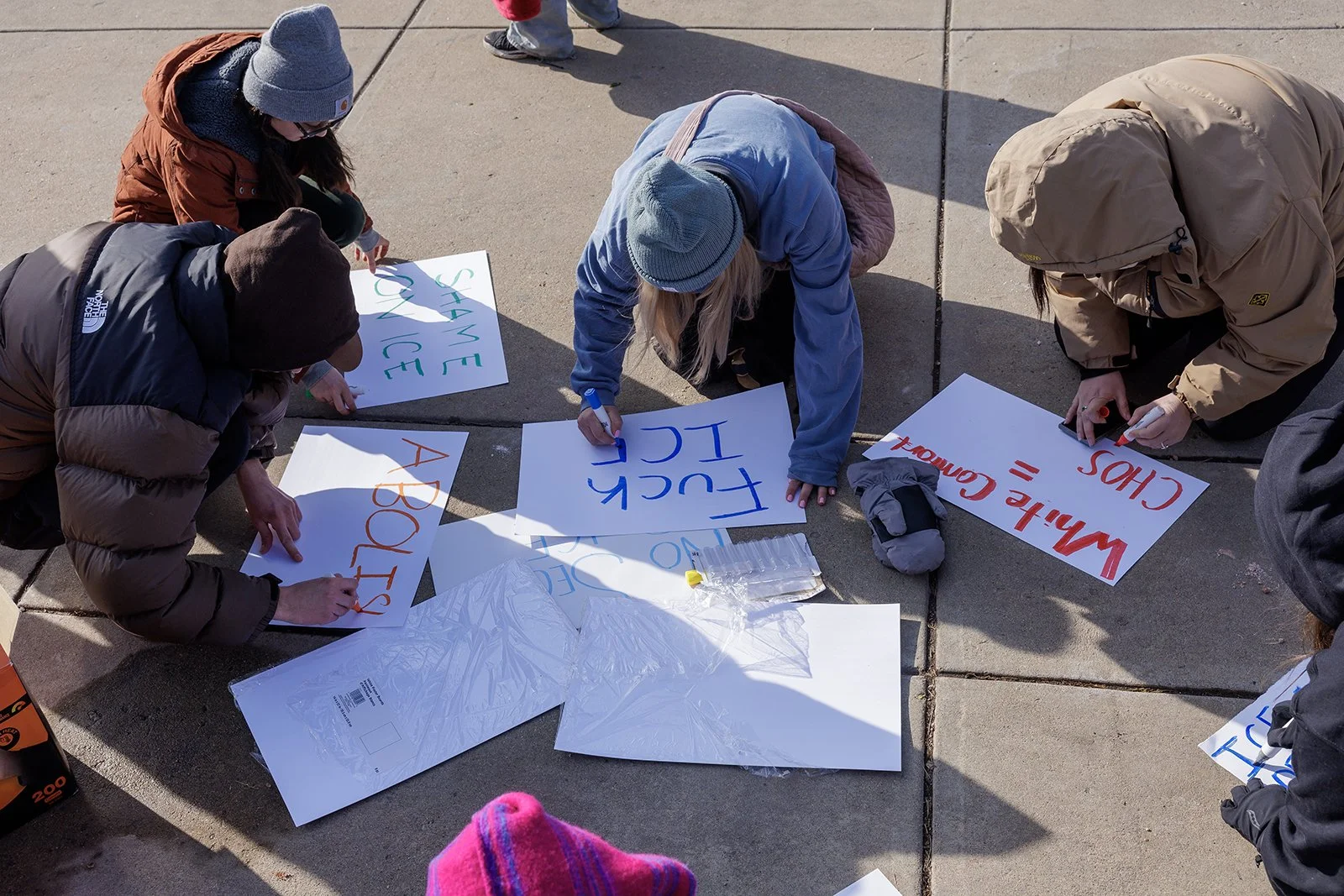
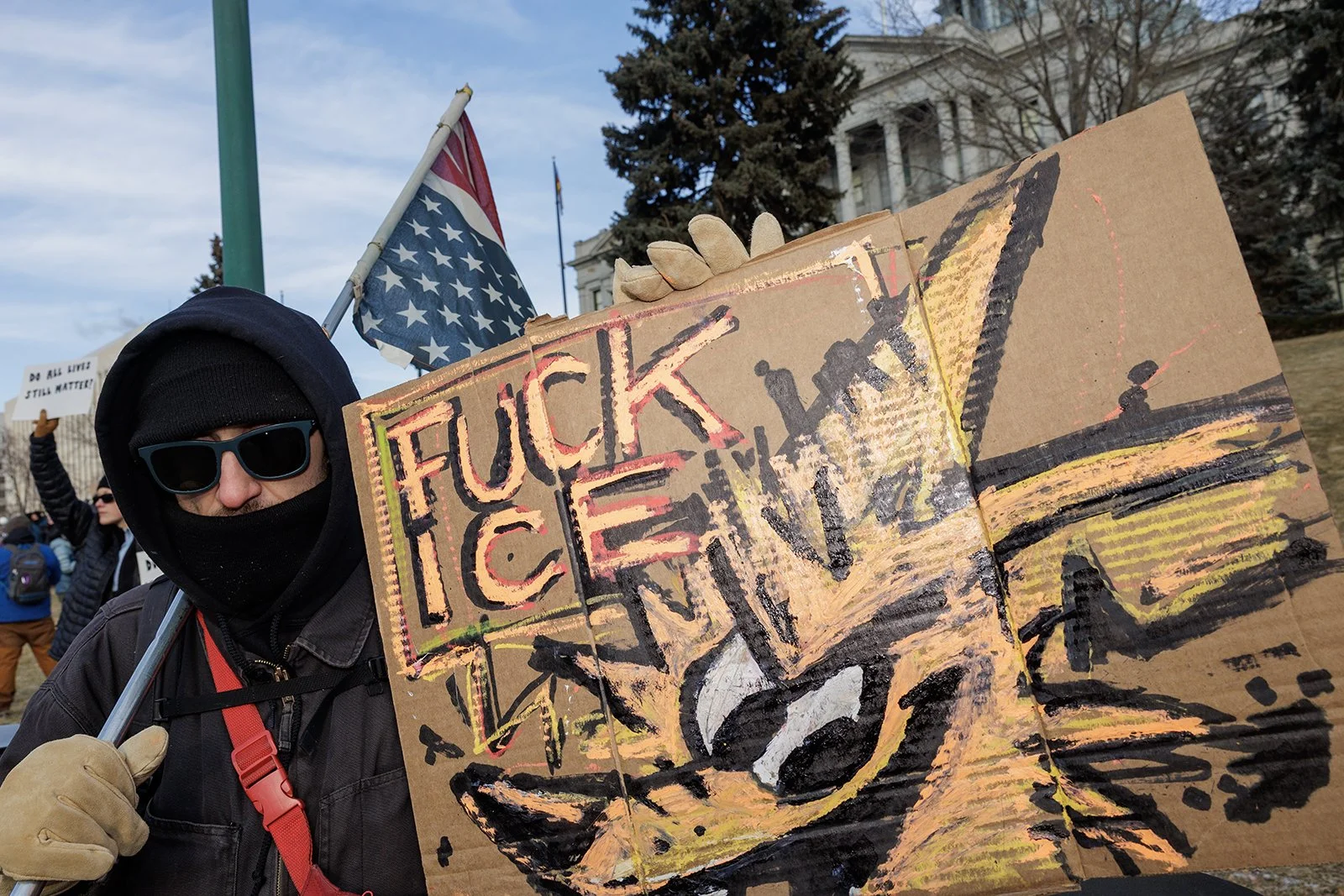
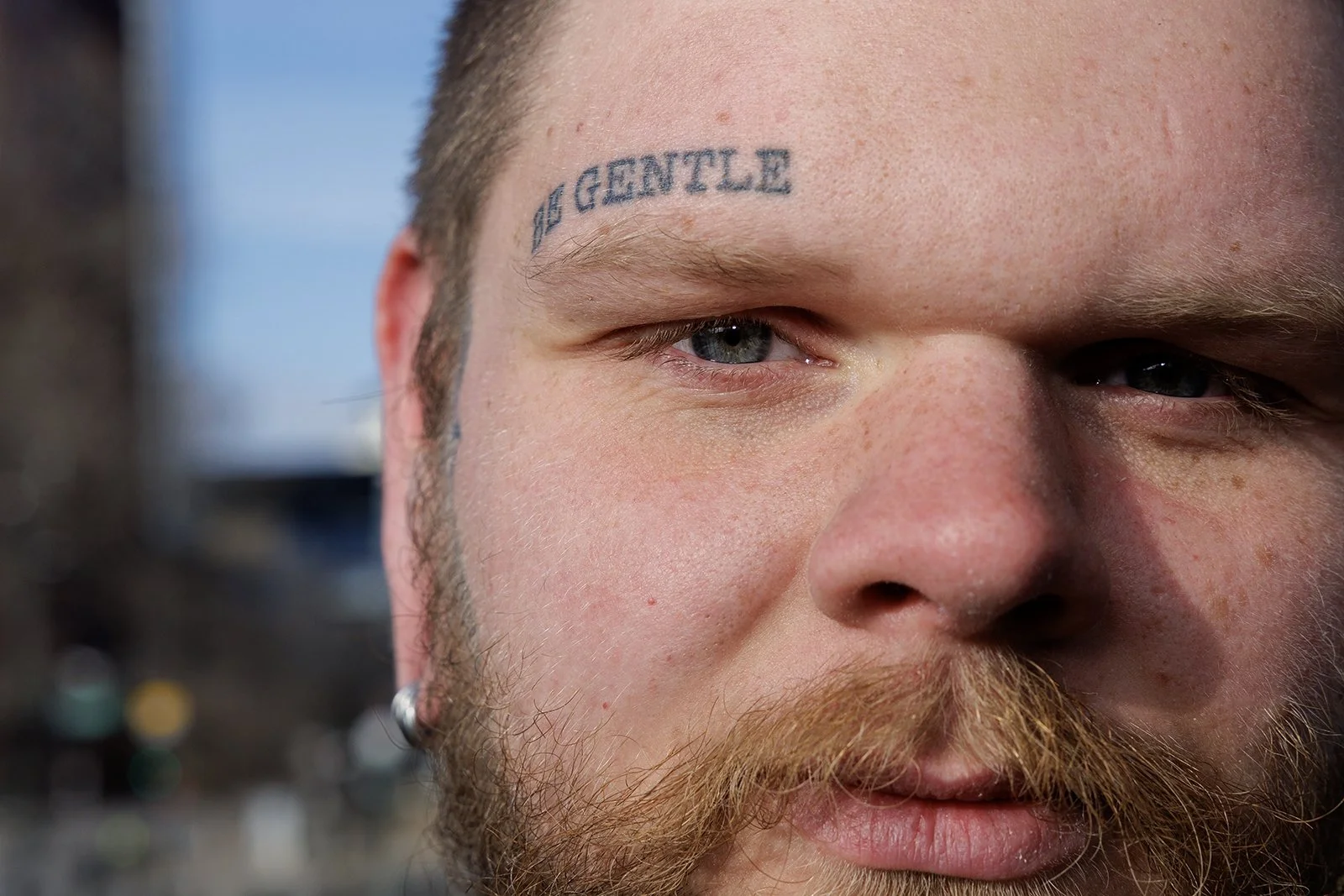
“They rule by fear and division,” she said. “I need to fight over fear. I lost my voice for a while, but now I’ve got it back.”
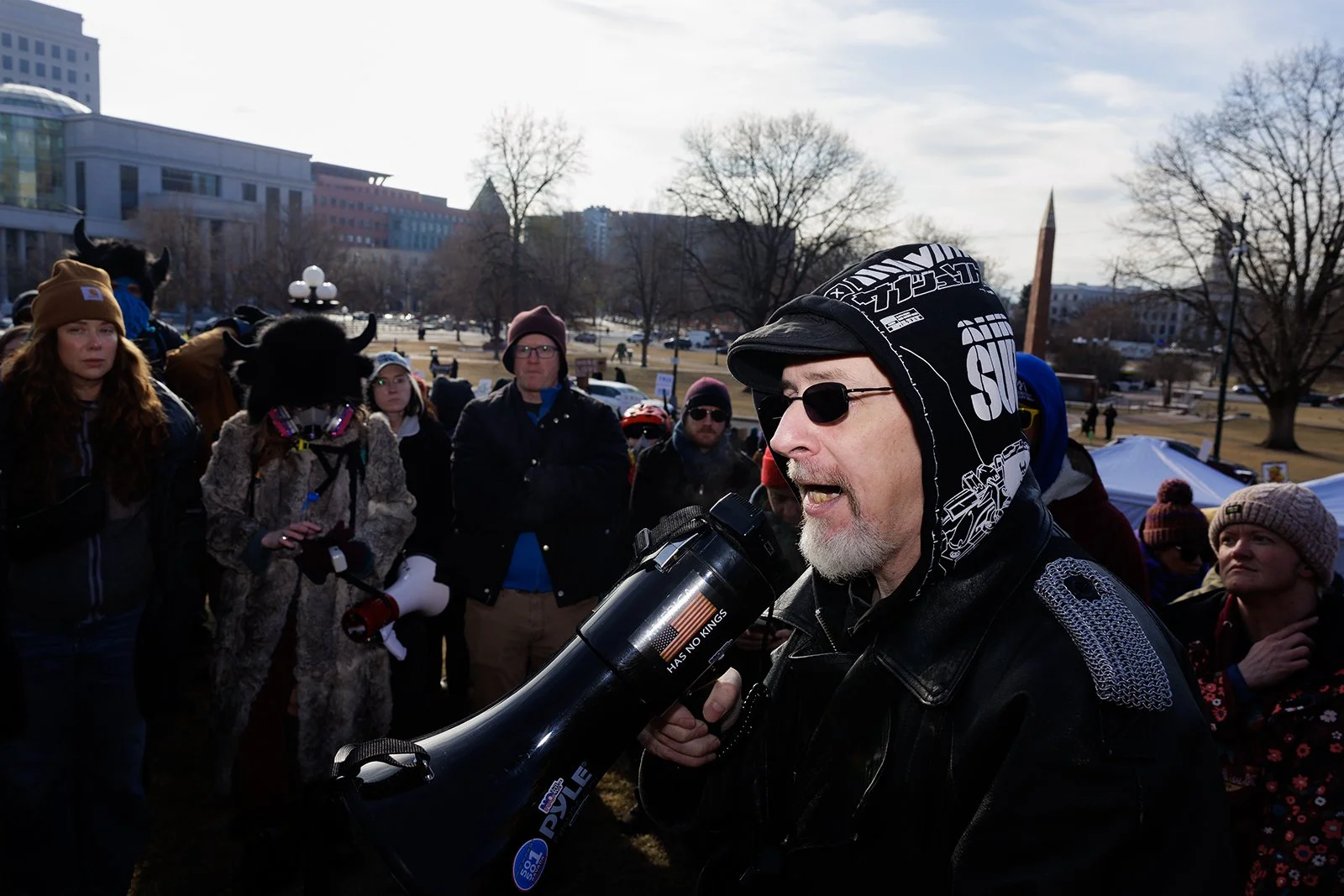
Tyler CrazyBear spoke with anger about what he called mistreatment by federal immigration authorities and the stakes for Indigenous people and other communities of color.
“I’m out here to fight for our rights and stop this fucking bullshit with ICE. This is native land. Our blood is in this land. Our bones are in this land.”
CrazyBear, who is a member of the American Indian Movement, said that he sees the targets of ICE raids as motivated by racism and hate.
“I’m just not saying Native people, I’m saying all Brown people are targets. The way that they’re treating us. They’re taking little kids and using them for bait. They’re taking parents away from their little kids. Our children are going to school, wondering where their little friends are that ICE takes. That’s not right.”
CrazyBear said that ICE is already active in Colorado, and he feared an escalation is imminent. His call to respond intensified further, calling for a more confrontational resistance.
“Our parents, their parents, are walking around here in fear. We don’t need to walk in fear. We need to stand up. When they get violent, it is time to get violent. We’re coming with fucking weapons, and we’re gonna take them out if they fucking walk into Colorado, believe that.”
His call to violence was immediately countered by others at the protest, who emphasized that such views were not representative of the crowd.
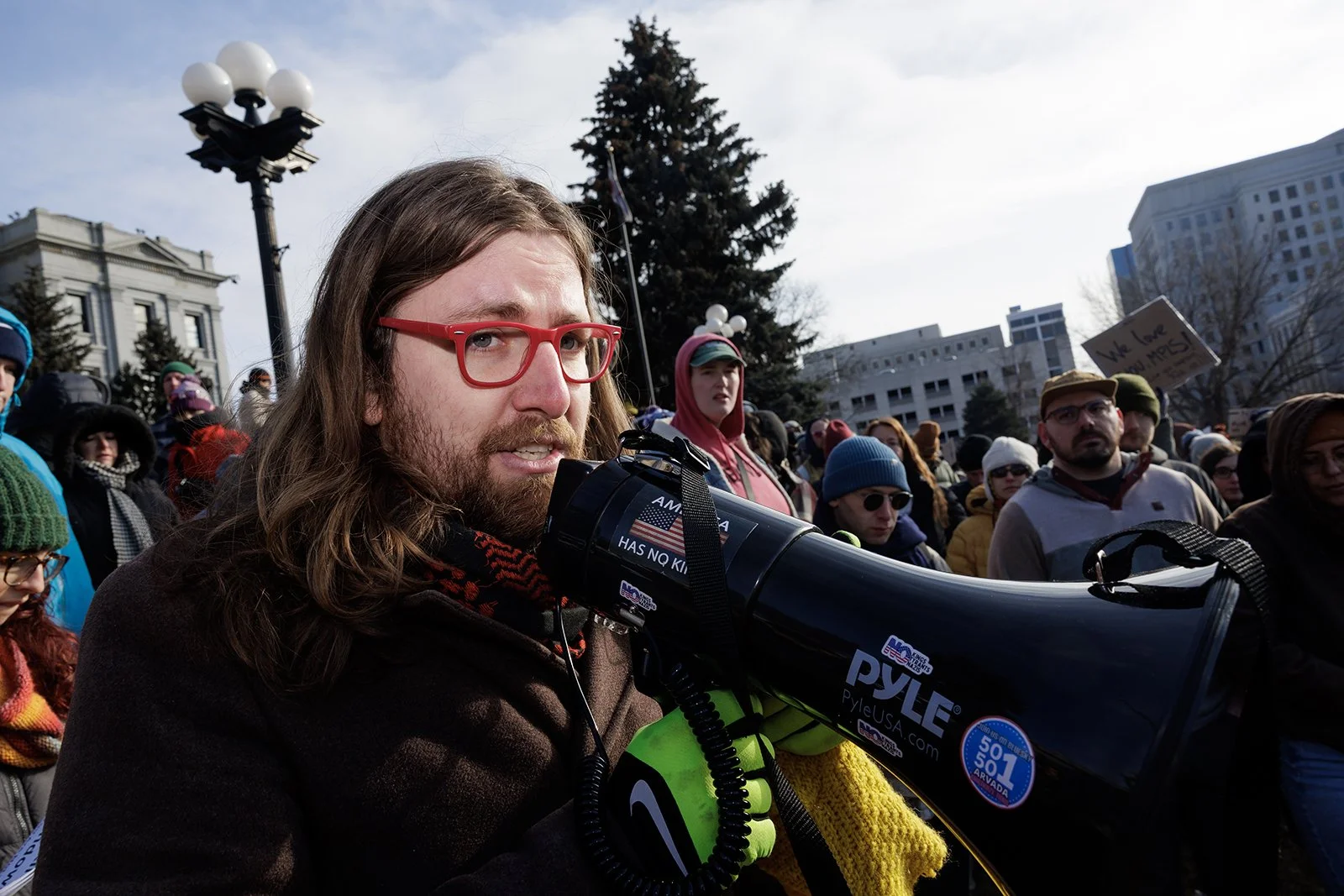
“There’s a lot of people here who really want to support peaceful protest, our right to peaceful protest,” said Aimee Woznick. “Everyone I’ve talked to has said stay peaceful. Stay safe.”
Woznick said the call to violence reflected only a handful of voices.
“I don’t think that’s what the group agrees with,” she said. “We want to stop violence, not start violence.”
She said the turnout itself was the message and that peaceful protests are a powerful tool for change.
“If people don’t see people coming out in freezing weather and protesting the murder of people in the streets, they think there’s no resistance,” she said. “When a lot of people come out and raise their voices, that’s when we really accomplish change.”
For many, the protest was about national solidarity. Evanne Ming said Colorado has a responsibility to engage.
“We need to be part of the conversation,” she said. “We can’t just put our heads in the sand.”