
Sinton Sanctuary Provides a Safe Space for Women to Lay Their Heads
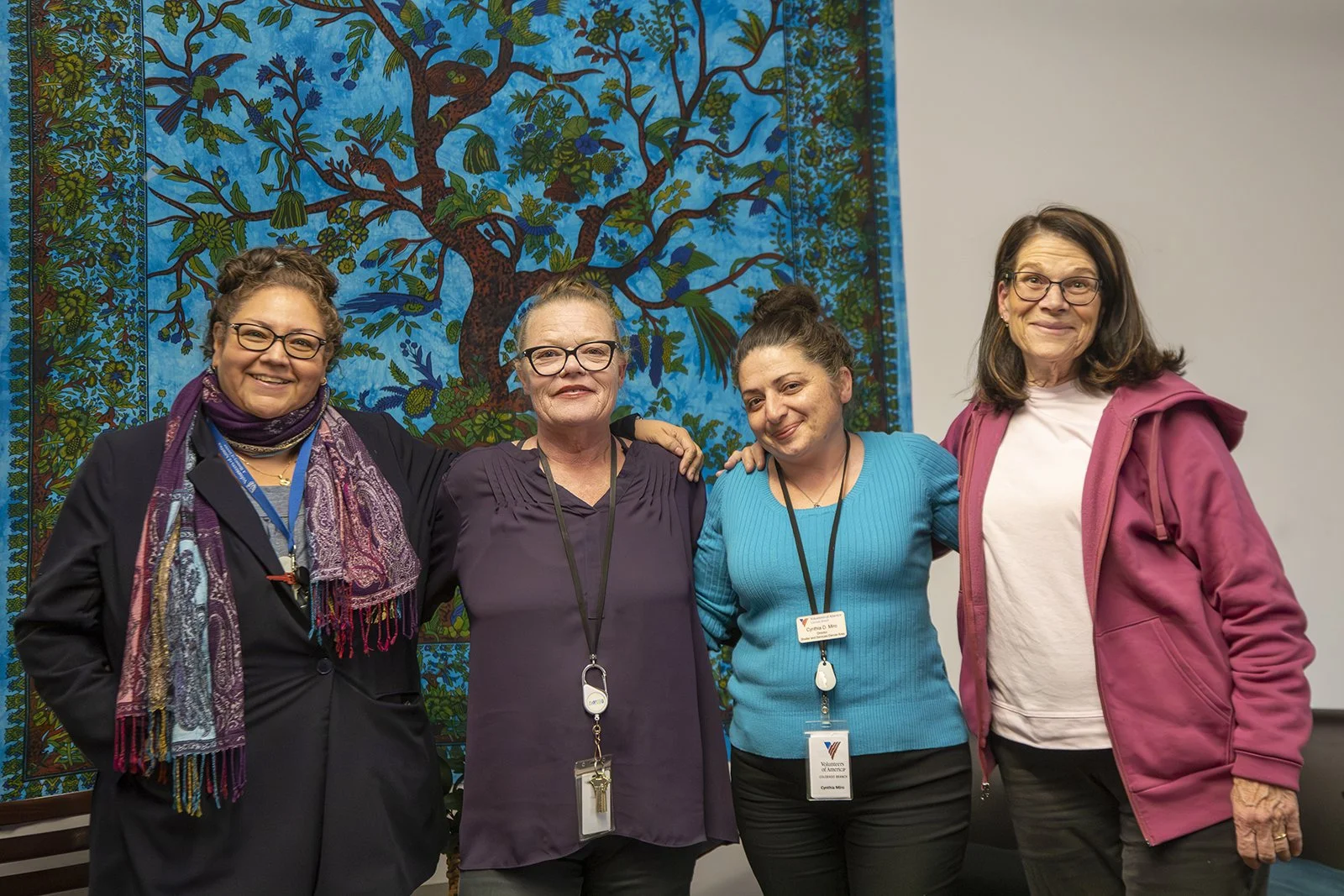
Story and photos by Mariana Ortega Rivera
Formerly a print and signage shop, Sinton Sanctuary has become a refuge for older women experiencing homelessness, transforming not only its building but the lives of the women it serves.
Since its opening during the peak of COVID in 2020, Sinton Sanctuary has served 219 women and permanently housed 101 of them.
Years ago, when the building was donated to Volunteers of America (VOA), there was a need for programming for veterans. The building was then remodeled to establish the Bill Daniels Veteran Services Center, where VOA envisioned using some of the space as a shelter.
Lindi Sinton — for whom the sanctuary is named and who is now retired as vice president of programs at VOA — and Angel Hurtado, chief programs officer, recognized a need for a shelter for older women after witnessing the high number of older women visiting their walk-up emergency shelter.
“It was hard for them to line up with the younger women,” Sinton said. “They were pushed out of line and sometimes bullied. They’d be there with their walkers and their oxygen, and the staff hardly knew what to do.”
Older women face challenges that many shelters are not equipped to address. Sinton Sanctuary specializes in serving women 60 and older. Shelter modifications include taller toilets and lower beds. At the walk-in shelter, Sinton and Hurtado reserved cots for older women. But they knew the women wanted something different.
“We said we will never do mats on the floor,” Sinton said.
When a visitor walks into Sinton Sanctuary, they’re greeted by calm and quiet.
“It’s calm, it’s comfortable, it’s colorful, it has a good vibe,” Sinton described.
The space is small, which is intentional, to help older women feel more comfortable in a living situation that’s new for most of them. Some have never been homeless; they were priced out of their homes.
As seniors, they rely on Social Security income that doesn’t always cover the rent, and while rental costs continue to rise, Social Security payments do not. Without sufficient support systems, many women find themselves with nowhere to go.
Hurtado said financial hardship is often compounded by what she described as “relational poverty”— a lack of close, nearby relationships. In many cases, the people they are closest to either live far away or lack the resources to help provide housing or financial support.
Sherri Welch, senior project manager at Sinton Sanctuary, said many women are ashamed to tell their families they’re staying at a shelter. In most cases, their families do not know.
Welch also said some women have family members living in subsidized housing, such as Section 8 apartments, where lease rules prohibit additional occupants. Allowing a parent to move in could put their housing assistance at risk. Many seniors also say they do not want to burden their children.
Sometimes, when older women turn to their families for help, the family members can only afford to put them up in a motel for a night or two. After that, the women’s housing options run out.
Sinton Sanctuary becomes their support system.
“Being around people their own age that they have things in common with, they really build a community around each other,” Welch said. “This population, at this time in their life, they need dignity and respect.”
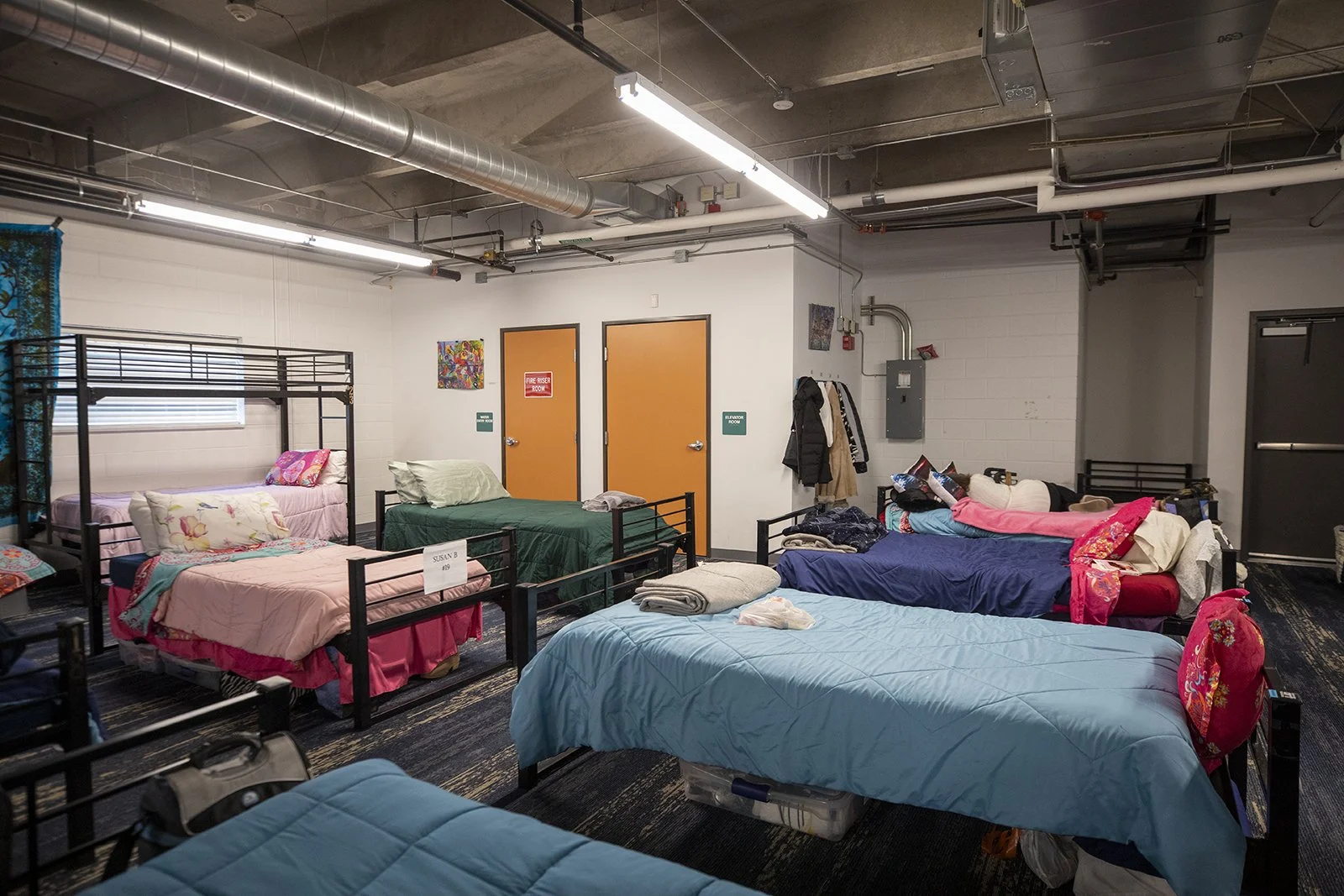
A few of the 25 beds at Sinton Sanctuary in Denver.
The sanctuary uses a person-centered, individualized approach resulting in strong housing outcomes. The staff helps residents obtain lost documents or apply for services such as Social Security, Medicaid, and food stamps.
“We don’t have an exit date,” Welch said. “As long as they’re working toward housing case management, they can stay there until they get a permanent place to live, or if needed, into a higher level of care.”
When residents require assisted living, a nursing home, or another facility, finding placement can be one of the greatest challenges.
“Getting someone into a higher level of care that needs it is so challenging,” Welch said. “There’s only so much we can do here.”
Volunteers and community partners play a critical role in Sinton Sanctuary’s success. The South Street Mobile Clinic, a mobile medical unit operated by Colorado Coalition for the Homeless, visits monthly. Students from a local Catholic school have provided manicures. The Division of Motor Vehicles (DMV) staff visit every three months to help residents obtain a free ID or driver’s license.
The shelter accepts women by referral from Denver-basedagencies, including nonprofits, other shelters, and police departments. After receiving a referral, the staff conducts a phone screening. During cold weather, the shelter opens its doors to anyone who arrives seeking warmth.
Adjusting to shelter life can take time, particularly for women who have lived on the streets for extended periods.
“They’re afraid. They don’t like being around other people. They’re worried about people taking their belongings,” Welch said. “So, we just kind of let them relax for a few days before we even dig into a lot of things.”
Residents are encouraged to establish routines. Lights snap on at 8 a.m., chores begin at 9 a.m., and residents rotate cleaning responsibilities weekly.
“I like them to be up and their beds made and dressed, because it’s depressing to lie in bed all day,” Welch said. “If they want to nap, of course, they can. But I don’t think it’sgood for their mental health to just lie around.”
Success stories prove motivational for staff. Former residents often return to share meals or to announce they’ve secured housing. Recently, two residents who’ve been friends for 40 years got a two-bedroom at Casa de Rosal, an affordable housing community for seniors.
Hurtado described a ripple effect of success, saying that when residents see others succeed, it reinforces the belief that they can achieve similar goals. Residents aspire to the successes experienced by the visiting former residents.
Still, transitions can be difficult. After months in a shared environment, moving into subsidized housing — often after a yearlong wait — can mean living alone again.
“It’s a psychological transition you have to prepare them for,” Hurtado said. “It’s essential to help them get connected to the community where they’ll be living.”
Sinton Sanctuary staff support residents who move into VOA affordable housing by coordinating their new services and providing a smooth transition.
Leaders say the model works.
“We’re really proud of our outcomes for this program,” Hurtado said. “It’s one of the most successful shelters that we have in the metro area.”
Welch believes similar small shelters for older adults ought to be established.
“They need these little shelters scattered throughout the city for the elderly because the program works,” she said. “Just having that small, intimate environment - it changes lives for them. They won’t succeed at a larger shelter a lot of times.”