
A Little Love Goes a Long Way
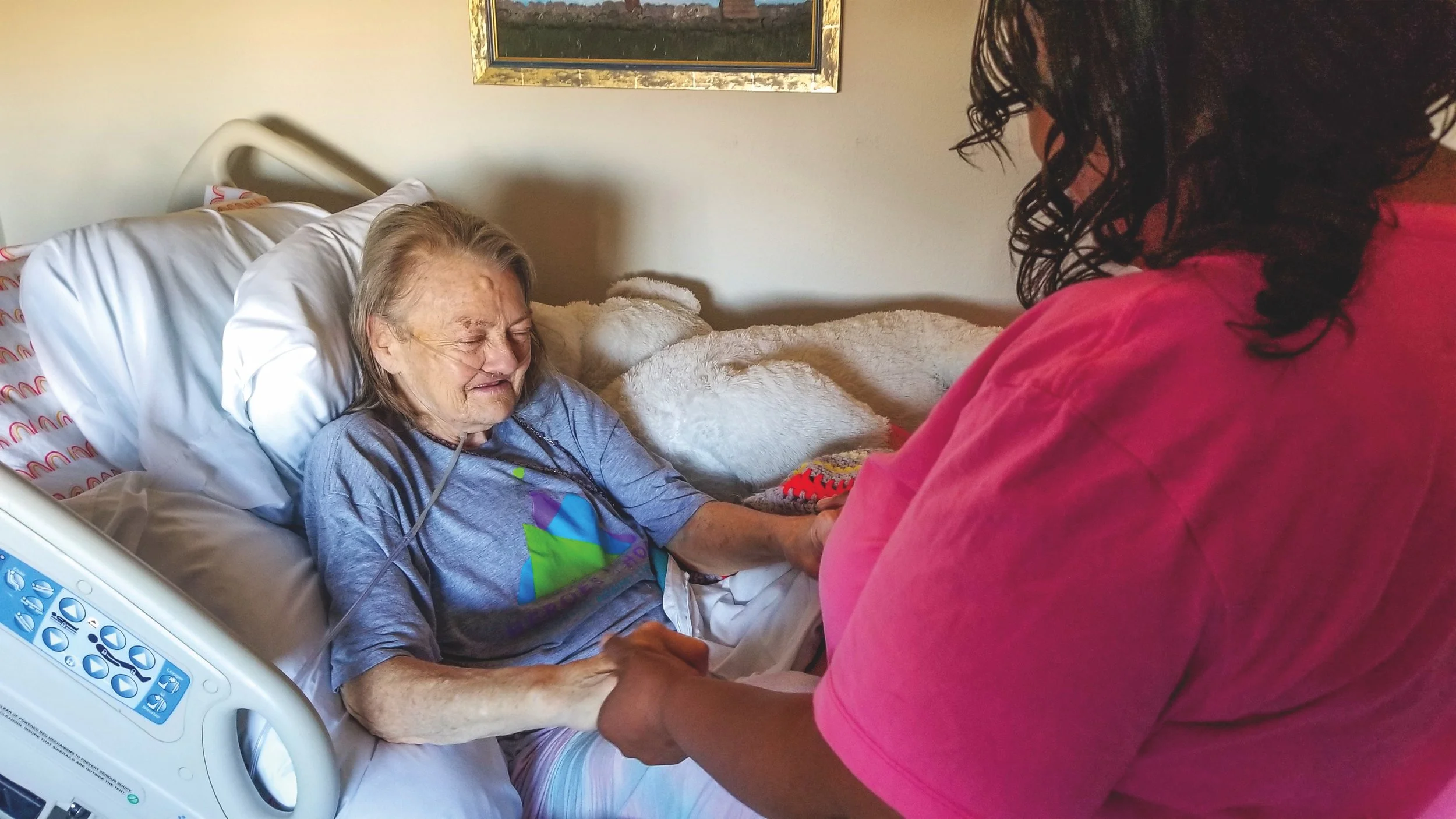
A caretaker at Rocky Mountain Refuge dancing with a guest. Photo courtesy of Rocky Mountain Refuge
Homelessness is a lonely and isolating experience for many, and even the smallest act of love can be transformational
Story by Robert Davis
Most people can fall in love, but they don’t have to overcome the challenges of homelessness while doing so.
Living without a home forces people to prioritize more basic needs, such as finding food and a safe place to sleep. Stigmas and negative stereotypes of homelessness also contribute to the sense of isolation and loneliness that many people who are homeless feel. Homelessness can also place significant stress on romantic couples due to privacy concerns and limited shelter space.
But that doesn’t mean homelessness is loveless. Love is a verb. It can take innumerable small acts to demonstrate to another person that they are loved; sometimes, it’s like building a mountain out of pebbles.
THE POWER OF LOVE
J.P. Hall, executive director of the Rocky Mountain Refuge, which provides end-of-life care for people who are homeless, said showing people who have lost their homes that they are lovable can have life-altering impacts.
“We try to find ways of making this time as pleasant and safe as possible, and for people who haven’t had very many choices in their life, that can be quite a change,” Hall said.
Showing love to people who are unhoused also can be personally transformative. Hall recalled a time in his life before he became a Gregorian friar, when he had a negative attitude about homelessness and the people who experience it. Then, he participated in an event serving meals to the unhoused and “just fell in love with them,” he said.
Jess Wiederholt of Mutual Aid Monday (MAM) has seen that personal transformation firsthand. MAM hosts a weekly potluck dinner for people experiencing homelessness, typically held on Mondays outside the Denver municipal building.
Hundreds of volunteers have helped MAM distribute food, clothing, and other goods to their unhoused neighbors during the last five years. The group also will set up distributions at other locations as needed, she said.
Wiederholt said that kind of selfless love can seem radical to some. But to her, this is what love looks like: “showing up, staying present, and using your voice to advocate for people who are too often ignored or criminalized for existing.”
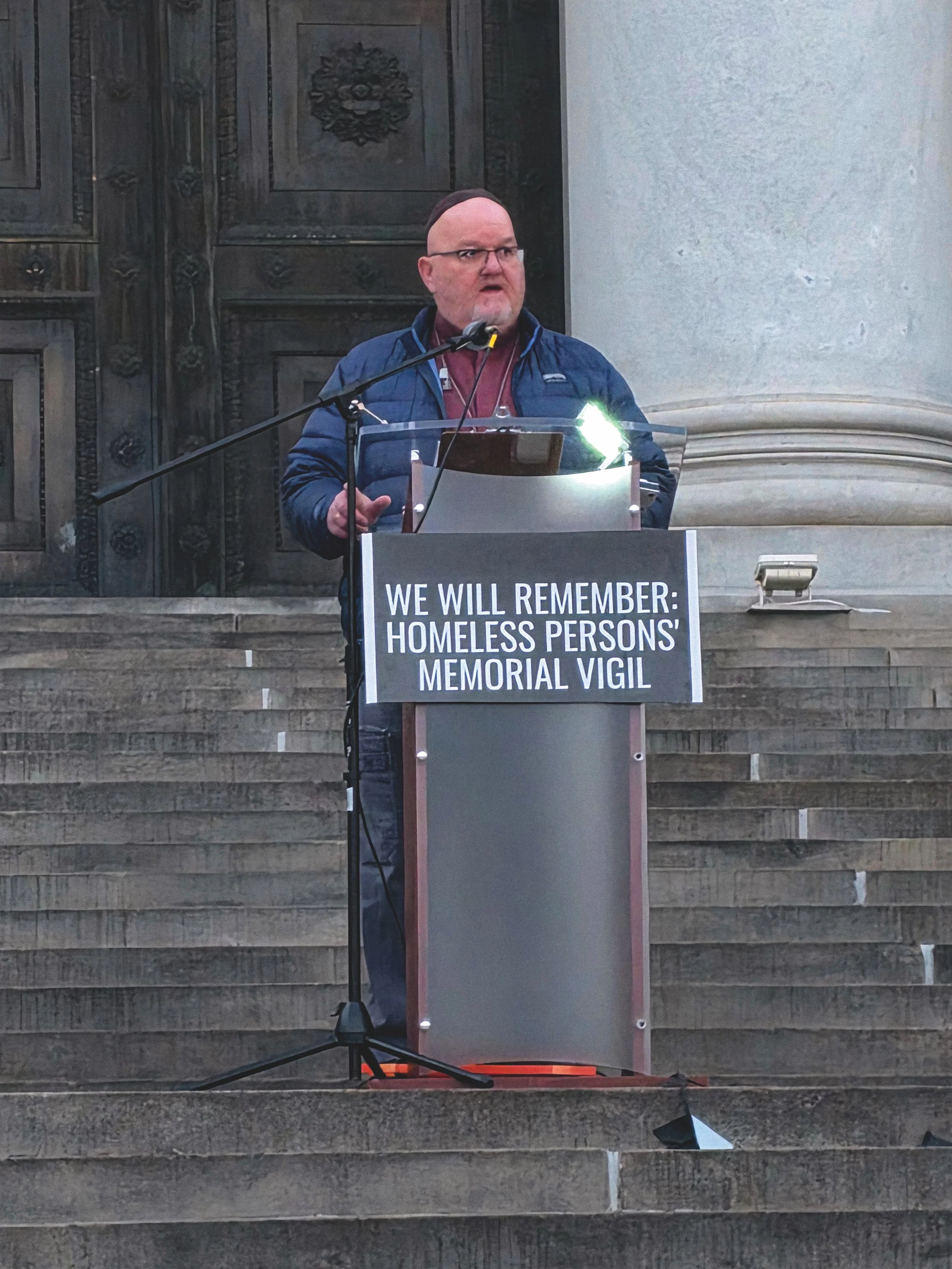
Brother J.P. Hall, executive director of The Rocky Mountain Refuge, speaks at the “We Will Remember” vigil on December 21. Photo courtesy of Rocky Mountain Refuge.
“That kind of reliability matters deeply,” Wiederholt said. “It tells people, ‘You are seen, you are valued, and you are not alone.’ True community shows up — not once, not seasonally, not when it’s convenient, but no matter what.”
“INHERENT DIGNITY AND RESPECT”
There are several ways community organizations in Denver take steps every day to show people experiencing homelessness that they are loved and deserving of love.
Lucas Land, development director at The Delores Project, which provides 24/7, low-barrier shelter for women, transgender, and nonbinary people, said that love is built on mutual trust. That includes trusting people to make the best decision for themselves.
“We start from that place of inherent dignity and respect for everybody, and so our low barrier policies are an extension of that,” Land said. “We don’t expect everybody to have it all together in order to have a bed to sleep in.”
In addition to providing a safe bed, The Delores Project operates a nightly meal program. Staff posts a menu at the beginning of the week, letting guests know which meals will be served each day, he said. Everyone is invited, but some people prefer to make their own meals.
“It’s a small way of giving our guests some autonomy over their lives,” he explained.
Love is much more than doing for others. It also involves feeling acceptance and belonging, which the Colorado Coalition for the Homeless (CCH) works to foster for its residents, said Cathy Alderman, CCH’s vice president of communications.
For instance, CCH encourages “resident councils” at its properties for neighbors to collaborate on activities and to recommend property improvements. The organization also hosts events such as a Veterans Ball at Renewal Village, a permanent supportive housing complex in Chaffee Park. CCH has also thrown a cookout and carnival for guests at North Colorado Station, and staff at the Stout Street Health Center also held a Soup for the Soul event for people receiving services.
In this sense, love means “supporting and creating opportunities for folks to be part of the community,” Alderman said. “All of these types of activities are intended to help people connect and get out of the isolation that we know homelessness can create for people,” she added.
SMALL ACTS
Little acts of love can go a long way for people who are homeless, but they don’t have to be grand or lofty. There are several small ways people can show homeless people that they are loved and deserving of it, too.
Land said one small, loving act everyone can do is to start up a conversation. It doesn’t have to be about why someone became unhoused; it can be about their hobbies and interests.
He recalled meeting one of The Delores Project’s guests at his wife’s ukulele concert in December 2025. After a brief conversation, Land left with a recommendation for an Italian sandwich shop that is down the street from his house. He said he’s eaten at that shop regularly ever since.
Hall adds that taking the time to build relationships with people who are homeless is one of the best ways to show someone that they matter.
“Treat them the same way as you treat anybody else,” Hall said. “Because they’re just another person. They’re not another species or creature of some sort.”