
‘Goodwill power’ and the future of street papers
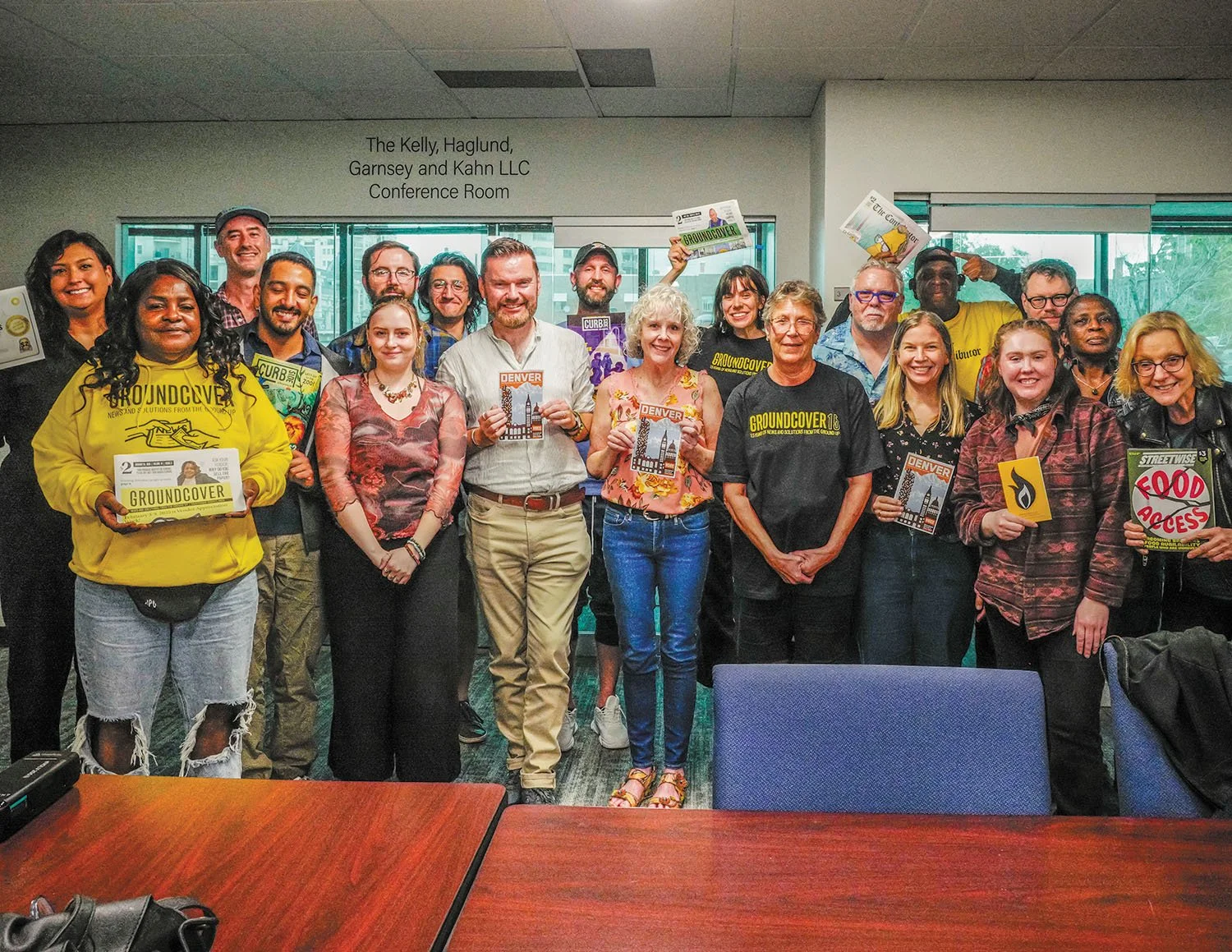
Denver VOICE hosted the annual North American International Network of Street Newspapers meetup in 2026 in Denver. Photo by Yvens Alex Saintil.
The U.S. media landscape has undergone a seismic shift in recent years as news consumers turn to digital platforms. It’s a trend that has threatened the existence of a special group of papers that help people who are homeless earn an income.
Street papers have existed in America for more than a century, with historical precursors including The War Cry, the official publication of the Salvation Army that debuted in 1879, and Hobo News, a paper the International Brotherhood Welfare Association began publishing in 1915. Modern versions of these models began cropping up across the U.S. in the 1980s as homelessness grew rapidly. Today, there are more than 30 street papers operating in the U.S. and more than 100 worldwide.
Those papers have done more than simply tell stories about our unhoused neighbors. Denver’s street paper, the Denver VOICE, has helped more than 4,500 people who were homeless earn an income since the paper was founded in 1996. Some of our current vendors use their income from the VOICE to pay rent for an apartment of their own, buy food and travel to meet with friends and family. In short, the income they earn from vending this paper helps them maintain the relationships homelessness breaks.
The challenges street papers face today can seem insurmountable. Federal policy shifts have made funding for street papers uncertain with the Trump administration outlawing federal agencies from supporting diversity, equity and inclusion programs,which street papers fall under. In turn, foundations have been hesitant to approve grants for fear of federal retaliation.
Declining trust in media has also turned some previous supporters into critics. Meanwhile, the rising cost of living has eaten away at household budgets and made it harder for supporters to continue donating.
Despite these challenges, experts say there are still ways for street papers to continue and keep making a lasting impact.
“There's enthusiastic people in touch with us, saying they want to set up a new street paper in whichever town or city they're in,” Mike Findlay, CEO of the International Network of Street Papers, a nonprofit organization that supports street papers across the globe, told the Denver VOICE. “We’ve got some goodwill power.”
Telling (hyper) local stories
Street papers have always excelled at telling stories, sometimes through a hyperlocal lens.
Pick up any edition of the Denver VOICE and you will find stories about the realities of homelessness written by those same people experiencing it, the latest news about issues that impact people who are homeless and features on artists creating space for people of all backgrounds to connect.
According to Findlay, street papers need to lean in to local storytelling and find ways to support the voices of people with a lived experience of homelessness. One initiative he's piloted in recent years is creating a journalism workshop for people who are homeless in the U.K. The classes train people on skills like interviewing and writing. Findlay said he is working on creating a toolkit for INSP-network street papers to set up a similar workshop of their own.
These workshops go beyond helping people tell true stories, Findlay explained. They are a way for street papers to get back to their core mission: showcasing the lived experience of homelessness and helping people rebuild the relationships necessary to find stability again.
“That creates a bit of excitement and opportunity around how street papers can continue and also expand their reach to new audiences, particularly where we've got those authentic voices in through vendor stories or that kind of extra lens that we provide to current affairs and news topics as well,” Findlay said.
Another trend that could raise the tide for street papers is the revival of print in the post-Covid era, Findlay added. For instance, a poll from Roularta Media Group in Belgium found that 37% of youth age 18 to 34 reported reading print more today than they did five years ago. Another 89% of respondents expressed a preference for hard-copy books rather than e-books.
“There's a real sense of revival in print actually, which I think is quite reassuring,” Findlay said.
Adopting AI
The future of street papers also includes learning how to use artificial intelligence to achieve their organizational goals, Findlay said.
He cautioned that street papers should not adopt new technology just because it exists. Instead, the organizations need to identify problems that new technology can help them solve.
At the same time, street papers can use new technology to make a poignant social critique. Findlay pointed to The Big Issue South Africa as an example of how street papers can adopt artificial intelligence without sacrificing their mission. The paper is the first in the world that was edited with the assistance of an AI-powered editor named Genevieve Stanley, which helped create an issue about Elon Musk and the dangers of AI.
“It's not about using AI to plagiarize, but it can help you synthesize information,” Findlay said.
Stronger collaboration
Street papers also can strengthen their standing by finding new ways to collaborate.
At times, those collaborations happen outside of the newsroom or print shop. Curbside Chronicle, a street paper in Oklahoma City, Oklahoma, has developed a series of social enterprises that help support its monthly paper. For example, the outlet launched Curbside Flowers, a full-service flower shop that helps people transition out of homelessness. Curbside also has partnered with local organizations like the Oklahoma City Thunder NBA franchise to sell branded merchandise that supports Curbside’s operations.
Street papers also are trying to find ways for newsrooms to do more collaborative reporting on issues that matter to their vendors and audience.
Annemarie Cuccia, editor-in-chief of Street Sense in Washington, D.C., told Denver VOICE her organization is trying to find a way to provide national-scope stories for street papers to localize. In some aspects, the idea is like a national wire service for street papers.
Two national stories that could be localized include the Trump administration’s attempts to rewrite the Department of Housing and Urban Development’s funding guidelines or the federal takeover of Washington, D.C.’s streets.
“We want to show how this story is affecting each of us in our individual communities and maybe go into local reporting from different areas,” Cuccia said.
What’s most important in these collaborations is that local street papers maintain their independence, Cuccia added.
“It’s really about making sure that we keep to that community-driven vision and that it is a place where people are close to the news,” she said. “We hope that our readers are in some ways close to the news, so people can sort of trust what they're seeing and see different voices that are elevated.”