REP. PETTERSEN HAILS SUPPORT ACT, WARNS FEDERAL HEALTHCARE CUTS COULD COST LIVES
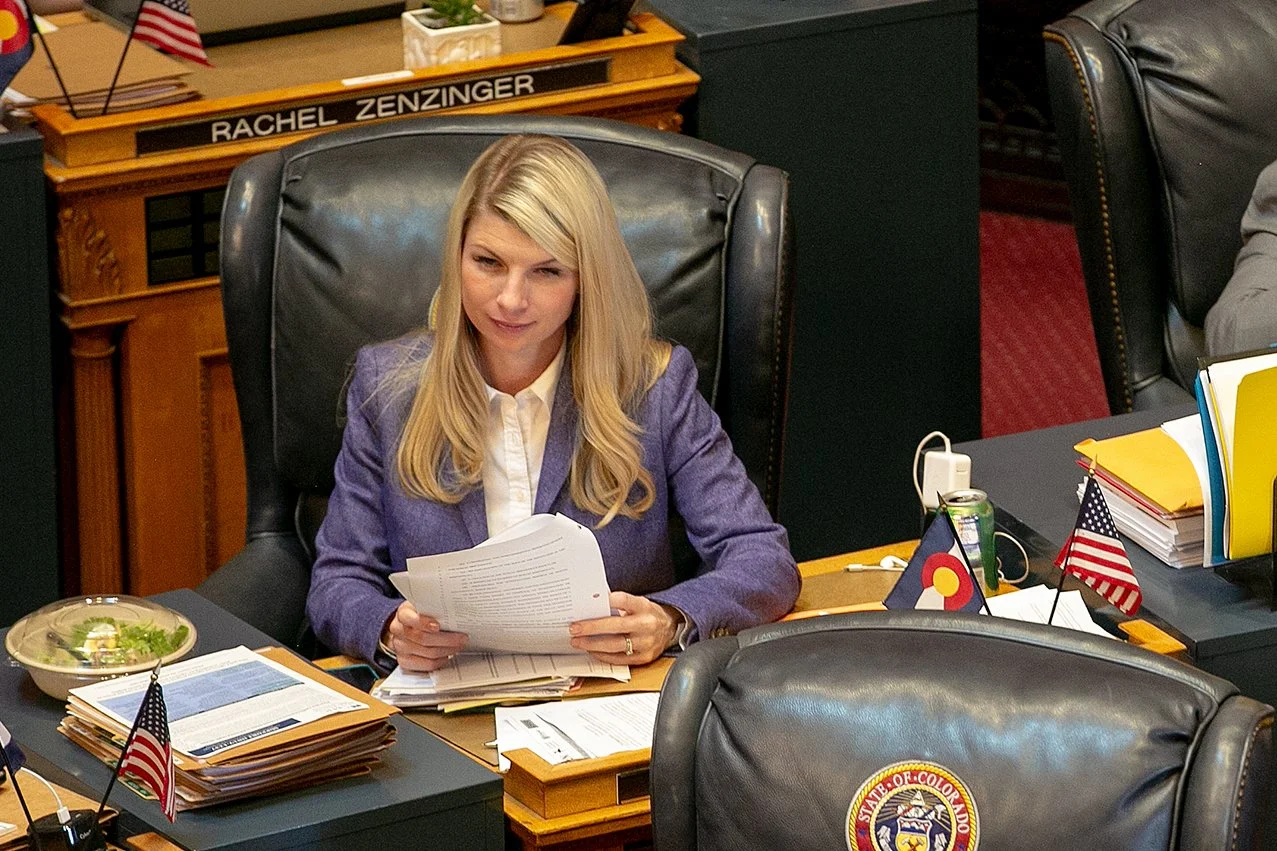
IN 2020, REPRESENTATIVE PETTERSEN HELPED USHER IN COLORADO’S WAIVER THAT OFFERS INDIVIDUALS ON MEDICAID ACCESS TO SUBSTANCE USE DISORDER TREATMENT.
Photos and Story by Giles Clasen
The bipartisan reauthorization of the SUPPORT for Patients and Communities Act will fund critical addiction treatment programs, U.S. Rep. Brittany Pettersen of Colorado said, but she warned that broader federal healthcare cuts could cost lives and unravel decades of progress in treating substance use disorders.
The SUPPORT Act, which Pettersen sponsored with Rep. Brett Guthrie, R-Ky., reauthorizes funding for a range of substance use disorder programs, including prescription drug monitoring, naloxone distribution, funding for Medication-Assisted Treatment, and treatment support for pregnant and post-partum women struggling with addiction.
“It reauthorizes funding for critical programs that Colorado depends on and makes sure that we’re keeping people alive who are at risk of overdosing from opioids, and ultimately having the ability to connect them to treatment,” Pettersen said.
According to Petterson, the passage of the bill is bittersweet because she fears cuts by the Trump administration to broader healthcare and Medicaid programs, weakening treatment options and funding for individuals facing addiction.
“Without providing people a path to get the care that they need and to live in recovery, it not only costs taxpayers significantly more; we’re also going to lose countless lives unnecessarily,” Pettersen said. Pettersen said that the Trump administration has caused significant damage by cutting federal programs that oversee and distribute federal dollars for addiction programs.
She pointed to more than 1,100 layoffs at the Substance Abuse and Mental Health Services Administration, known as SAMHSA, which are hamstringing the delivery of substance use treatment.
“What’s happening already is that it’s really difficult to disseminate the dollars that are available federally because of all the people that they fired with SAMHSA,” Pettersen said. “I’m grateful to have the dollars from the SUPPORT Act that have the potential to be utilized, but I’m very realistic with how difficult it is going to be for states to benefit from them when the layoffs make implementation very difficult.”
Pettersen said Trump has used the fentanyl crisis to justify many of his foreign and domestic policies, including tariffs on imports from China, Mexico, and Canada, and military posturing against Venezuela. He has also repeatedly blamed immigrants for smuggling the drug and used the claim to justify his deportation policies.
“[Trump] used the fentanyl crisis to target the immigrant community and people of color, and I don’t think he ever actually cared about the people that were losing their lives to addiction in the United States,” Pettersen said.
In December, Trump signed an Executive Order designating Fentanyl a Weapon of Mass Destruction. Democrats held up the SUPPORT Act’s reauthorization in the spring of 2025, despite near-unanimous support for the bill when it passed in 2018.

U.S. REP BRITTANY PETTERSEN OF COLORADO AND HER MOTHER LINK ARMS DURING A RECENT VISIT IN DENVER.
“I am confused [that] we are working on the SUPPORT Act while [the] administration is working independently of Congress to undermine its aims,” Colorado Rep. Diana DeGette said in an interview with Politico last April, as the bill stalled in the House Energy and Commerce Committee.
Beyond staffing cuts, Pettersen said changes to federal Medicaid waiver policy could have life-threatening consequences for people seeking treatment. She cited new restrictions on the Section 1115 waiver, which Colorado and 39 other states have used to expand access to substance use disorder care through Medicaid.
Section 1115 waivers allow states to expand Medicaid coverage beyond traditional limits when they can demonstrate cost savings over time, a tool Colorado has relied on to fund addiction treatment.
In 2020, Pettersen helped usher in Colorado’s waiver that offers individuals on Medicaid access to substance use disorder treatment.
Under the waiver, states were allowed to cover services not traditionally reimbursed by Medicaid if they could show long-term cost savings. Pettersen said new federal language now requires states to prove immediate cost neutrality, a standard she called impossible to meet.
Pettersen said the change effectively eliminates the waiver as a tool to treat individuals.
“What’s happening at the federal level to our entire health care system is just devastating,” she said. “It’s gut-wrenching to think about the lives that we are going to lose unnecessarily.”
Pettersen’s advocacy on addiction policy is deeply personal. She has spoken publicly about her mother’s struggles with substance use disorder and the impact it had on her growing up. She struggled to find help and care for her mother because treatment options were financially out of reach.
“People like my mom, who are unable to afford the care that they need, are going to be left with nowhere to go,” Pettersen said. “The state of Colorado and the federal government spent over $1 million in one year keeping her alive while she was in critical condition from overdosing instead of providing access to the medical care that she needed.”
Pettersen said eliminating Medicaid waivers as a funding tool for treatment is short-sighted and deadly for those who can’t find care.
“This is a health condition, and we need to treat it that way,” Pettersen said. “Without providing people a path to get the care that they need, and to live in recovery, we’re costing taxpayers significantly more over time. We’re also going to lose countless lives.”
The SUPPORT Act does not replace Medicaid coverage or the 1115 waiver, Pettersen explained, but instead reauthorizes funding for programs that Medicaid cannot cover. Pettersen said much of the federal legislation reshaping health and social service programs will not take effect until after the midterm elections, giving Colorado limited time to prepare.
“This is going to hit us across the United States and decimate the progress that we’ve made,” she said.
Pettersen said stigma remains one of the biggest barriers to addiction treatment and said she feels a responsibility to continue advocating for people with substance use disorder.
“Stigma around addiction is very real,” she said. “It’s the greatest barrier that people face in getting the care that they need. I will never stop fighting for people like my mom who have a medical condition and not a moral failing.”
While she described the moment as difficult, Pettersen said she draws hope from local efforts in Colorado.
“The hope that I have is in the people I see every day on the ground who are rolling up their sleeves to fill critical needs,” Pettersen said. “It’s going to be a rough road ahead, but in Colorado, we are resilient.”