
The Every Day Medical Risks of Living Unsheltered
Story and photos by Giles Clasen
When Teaya Wrexha woke up, near Paco Sanchez Park, her thumb was already swollen and about the size of a squash. She dug into her thumb and began pulling out a bug that had burrowed deep.
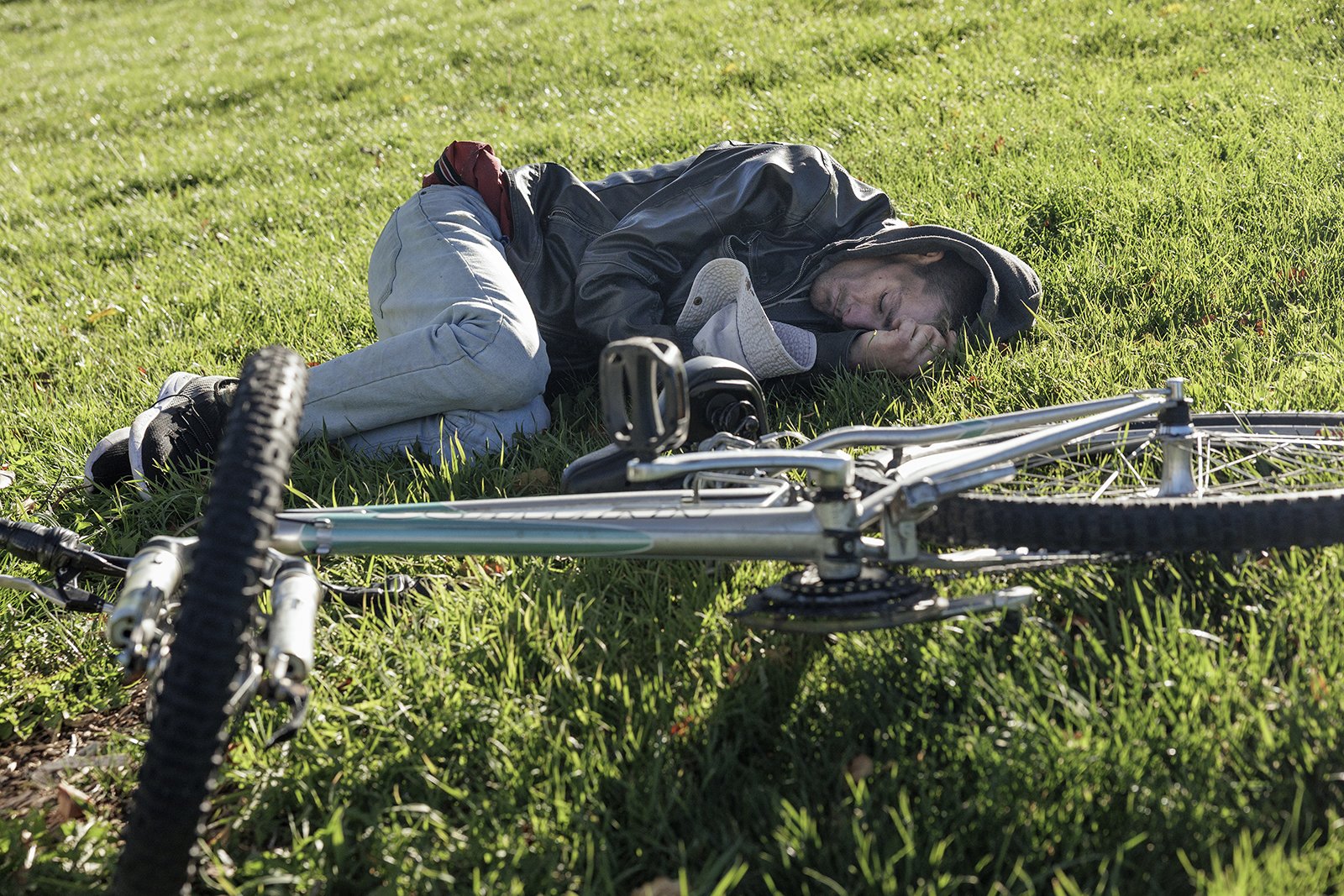
FOR WREXA, HER WOUND IS MORE THAN AN INJURY – IT’S PROOF OF WHAT PEOPLE OUTSIDE ENDURE UNSEEN.
“I think it was a millipede, maybe a centipede,” she said. “I was sleeping outside, and I woke up with my thumb burning. It was like the thing had gone inside. I squeezed it, and it hurt so bad. I thought I was gonna lose it.”
Living unsheltered means even a minor wound can become life-threatening. But Wrexha never thought she was vulnerable to such a “crazy thing.”
“It scared me,” she said.
Wrexha tried to clean the wound with what she could find, but she didn’t have money and didn’t have much to work with in her gear. She had some dog antibiotics she had stowed away, so she took those, hoping they would help. But her thumb continued to get bigger and bigger until she lay on the grass in agony, sometimes screaming in pain.
Wrexha identifies as transgender and isn’t on hormones currently.
“I found my own gender. I took it back.”
She said it is difficult to access transgender treatment while living on the streets, and she isn’t sure how her body would react to the treatment. So, she is waiting until she is more stable before she explores her options.
“Why they tried to convince me I was a guy is the real mystery,” she said. “Because I wasn’t a normal guy, and I was bullied. Now I stand up to bullies.”
Wrexha has been homeless since she was a teenager. She had behavior issues in school and struggled with ADHD and bullying. Ultimately, her father forced her to leave home. Wrexha sleeps where she can. She sees herself as a protector of women on the streets and still has a seething hatred of bullies.
But one insect bite had immobilized her in pain, barely able to stand.
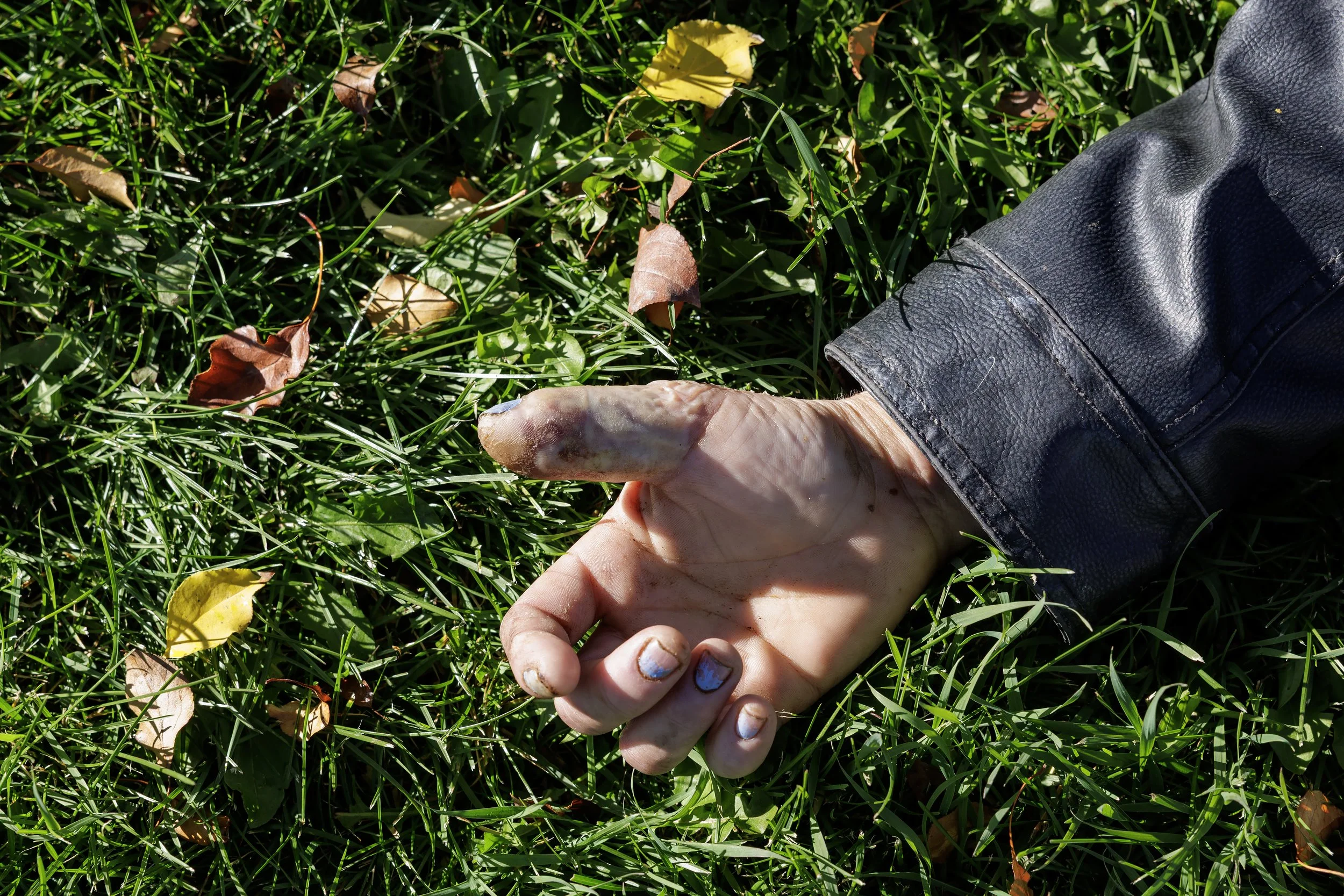
LIVING UNSHELTERED MEANS EVEN A MINOR WOUND CAN BECOME LIFE-THREATENING. BUT WREXHA NEVER THOUGHT SHE WAS VULNERABLE TO SUCH A “CRAZY THING.”
The thumb injury lingered, but Wrexha wouldn’t go to Denver Health and refused transportation to other clinics. She said she has learned to be independent and find a way in impossible circumstances.
“I’m not going to Denver Health,” Wrexha said. “They treat us like shit. I’ve had too many bad experiences there.”
Wrexha did get access to bandages and treatment and said she hoped her hand would heal without needing to go to a hospital or clinic.
Most people understand that when there is extreme weather, individuals living unsheltered on the streets are at risk. But, like Wrexha, many individuals experience dangers and traumas that are hard to imagine.
Dr. Sarah Axelrath, a primary care and addiction medicine physician with the Colorado Coalition for the Homeless, said the reality is far more complex and dangerous.
Working through Stout Street Health Center’s clinics and street medicine teams, Axelrath treats people living outdoors across Denver. She describes a web of overlapping risks — medical, environmental, and social — that most housed individuals never have to think about.
“People who are unsheltered have higher rates of both acute and chronic illnesses and injuries,” Axelrath said. “We see a lot of acute injuries like accidental traumas, a lot of acute illnesses, like skin and soft tissue infections, and bad flus and pneumonias. And then we also see higher rates of pretty much every chronic medical condition you can name, including hypertension, diabetes, heart disease, and cancers.”
Environmental risks and more traditional medical conditions often coexist, she said, compounding suffering and making treatment uniquely challenging.
Even when an individual living on the streets wants to find treatment, accessing care can be difficult.
“When you are homeless and unsheltered on the streets, you can’t just pick up and go to a doctor’s appointment,” Axelrath said. “They would have to potentially leave their tent unguarded with everything that they own inside. It’s like walking out of your front door with the door unlocked and wide open, inviting somebody in to steal everything you own.”
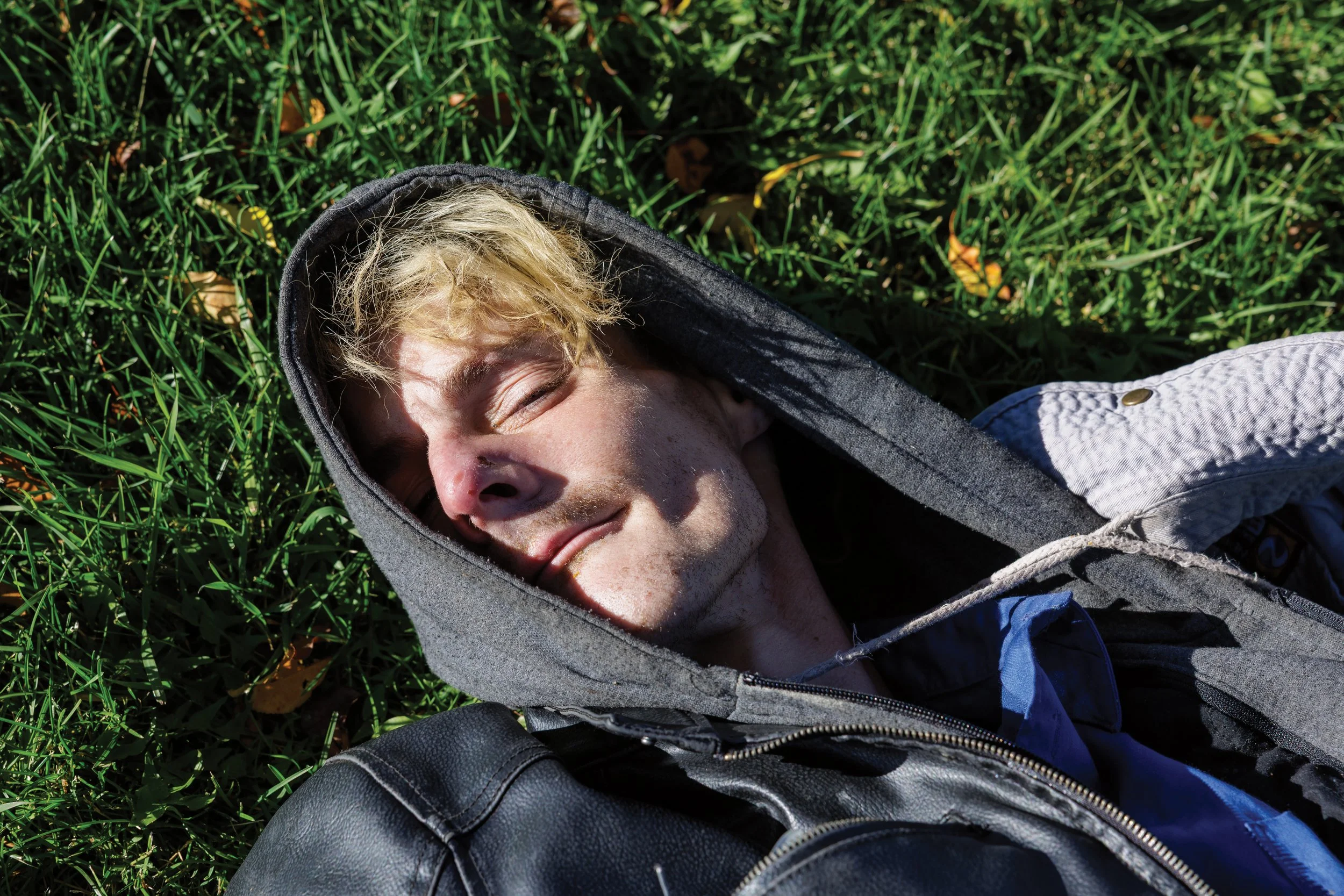
“PEOPLE WHO ARE UNSHELTERED HAVE HIGHER RATES OF BOTH ACUTE AND CHRONIC ILLNESSES AND INJURIES,” AXELRATH SAID.
Barriers compound from there. Transportation and tracking appointment dates and times can be difficult when an individual has few resources. And it is common for individuals experiencing homelessness to have deep trauma from past medical experiences, leading to distrust of medical institutions.
That fear and distrust, Axelrath said, is rooted in real harm. Many patients have been stigmatized or dismissed in emergency rooms and clinics, leaving them wary of returning even when their lives depend on it.
For those who live outdoors year-round, the environment itself can be deadly.
“We see a lot of frostbite in the winter, which leads to amputations and lifelong disability,” Axelrath said. “Then we see the opposite in the summer: heat stroke and heat exhaustion.”
People are also struck by cars or scooters, attacked, or fall ill from pollution and environmental hazards.
“We see a lot of skin and soft tissue infections just because they don’t always have reliable access to basic hygiene,” Axelrath said. “It doesn’t take that much for something that starts as a mild infection to progress to something pretty bad.”
Respiratory illness is another recurring issue.
“They’re inhaling smoke and exhaust fumes and staying in industrial areas [where they are less likely to be noticed] with dust or other chemicals,” Axelrath said.
Physical dangers often lead to emotional trauma, and the trauma itself feeds back into homelessness. One of the most misunderstood aspects of life on the streets, Axelrath said, is how trauma and fear can drive substance use.
“Substance use as a cause of homelessness is not even in the top three,” she said. “The top causes are housing instability, unaffordability, and unemployment.”
But once people are on the streets, drug use often becomes a coping mechanism for extreme circumstances, Axelrath said.
“Many people who are homeless did not use meth before they became homeless,” Axelrath said. “They end up using meth during homelessness because they are trying to stay awake at night so they can be safe and not feel so vulnerable.”
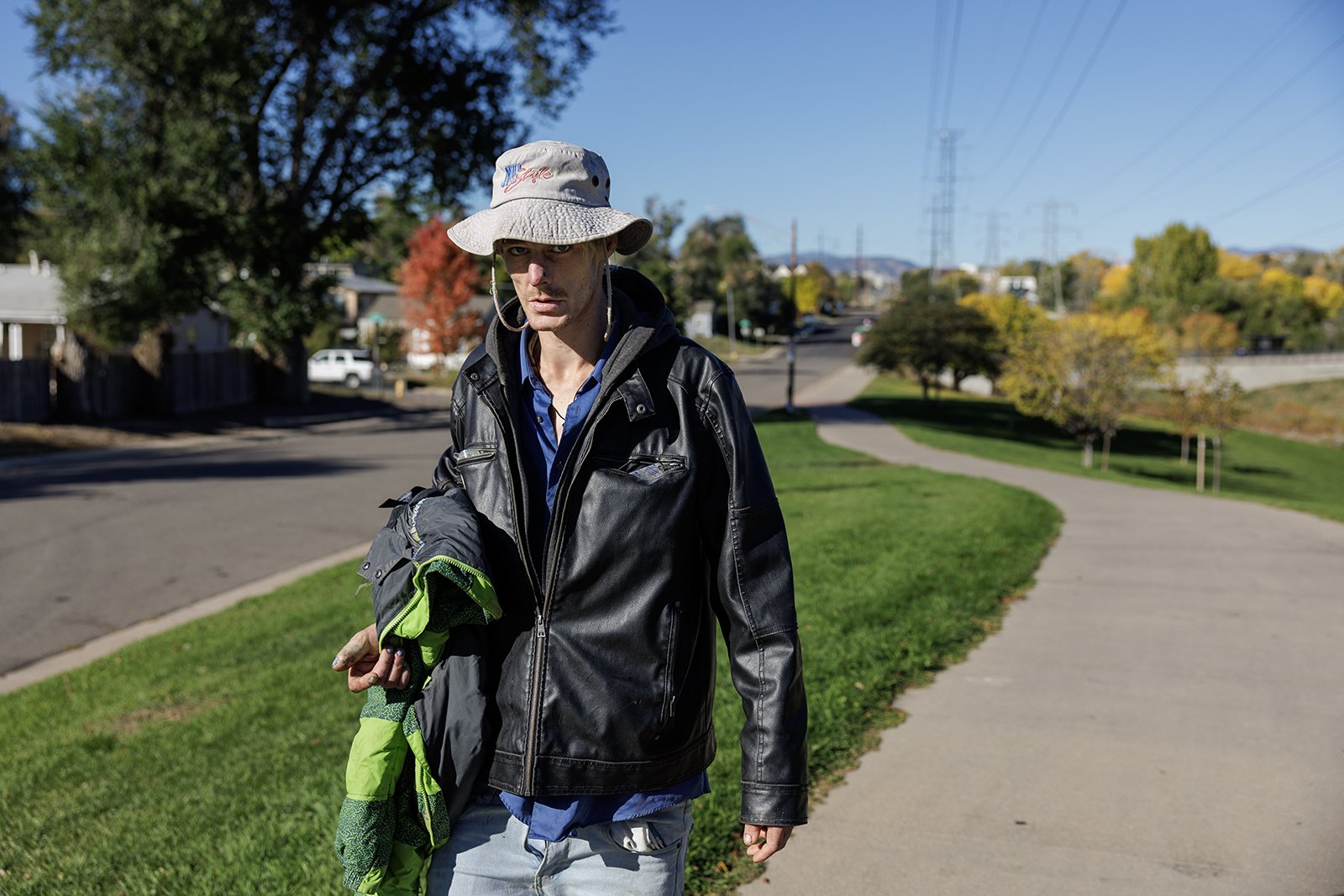
WREXHA SLEEPS WHERE SHE CAN. SHE SEES HERSELF AS A PROTECTOR OF WOMEN ON THE STREETS AND STILL HAS A SEETHING HATRED OF BULLIES.
That survival strategy can quickly trap people in a cycle of exhaustion and addiction.
“There’s nowhere safe for them to sleep during the day,” she said. “So sometimes they use opiates to come down and try to get a little sleep. If they can’t, they use more meth to stay awake, and they get trapped in this cycle of profound sleep deprivation and escalating substance use.”
Traditional healthcare systems are rarely equipped to meet those realities. Many patients turn to emergency rooms, which provide only short-term solutions.
Street medicine and integrated outreach models are growing, Axelrath said, driven by younger healthcare workers eager to serve outside of traditional clinics. That gives her hope.
“We could work anywhere else, but we all work here by choice because we think it’s important and we really like doing it. That inspires me every day.”
For Axelrath, the goal is simple but urgent: meet people where they are, literally and emotionally, before the system fails them entirely.
Despite the agony of Wrexha’s injury, she insists she has seen much worse on the streets. She said she knew a man who froze to death in a porta-potty in Pueblo while he tried to survive a particularly cold night.
“Someone has to die for things to change,” she said. “They finally opened the shelters [during extreme weather], but a man had to freeze to death.”
She paused, eyes heavy but fierce. “You’re gonna die in your sleep,” she imagined someone saying. “I won’t. I’m too powerful. I have trained and honed my body to be a fighting force, and that’s why I fight homelessness.”
Wrexha studies the swollen mark on her thumb, the scar left from the burrowing insect. For her, it’s more than an injury — it’s proof of what people outside endure unseen.
“I can live out here and sleep in a yard and survive the cold night,” she said. “That’s all I need. Thank you.”